
Balut Nutrition: Calories, Protein, Iron, Cholesterol & Health Benefits
Discover the nutrition profile of balut, including calories, protein, iron, cholesterol, fat, and other essential nutrients. This guide explains how much nutrition you can get from one balut egg, explores potential health benefits and dietary considerations, and answers common questions about whether balut is healthy. Learn what makes this traditional Vietnamese food distinctive, how its nutritional value compares with regular eggs, and what to consider when enjoying balut as part of a balanced diet and varied eating pattern in moderation.
On this page
- Balut Nutrition at a Glance
- How Many Calories Are in Balut?
- How Much Protein Does Balut Have?
- Balut Iron and Other Minerals
- Balut Cholesterol: Is It High?
- What Types of Fat Are in Balut?
- What Vitamins and Nutrients Does Balut Contain?
- Is Balut Healthy?
- Balut Health Benefits
- Balut Health Risks and Dietary Considerations
- Balut vs. Regular Eggs
- Balut in Vietnamese Food Culture
- How to Include Balut in a Balanced Diet
- The Bottom Line
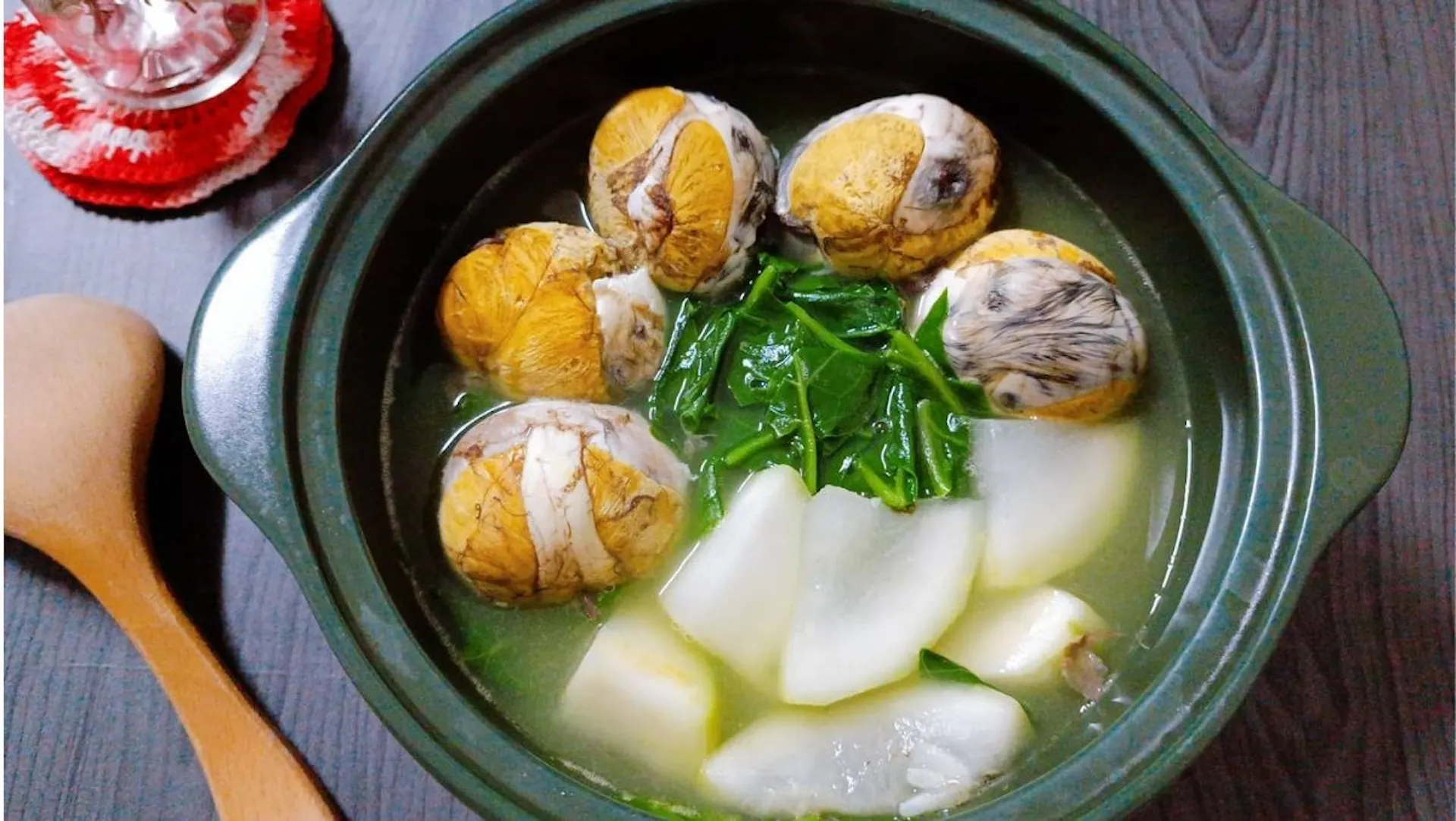
Balut is a fertilized duck egg that is incubated until the embryo has developed, then boiled and eaten in the shell. Known as hột vịt lộn in Vietnam, balut is a familiar street food and part of the country's broader food culture. It is also widely associated with Filipino cuisine and is eaten in several Southeast Asian countries.
From a nutrition perspective, balut provides protein, fat, minerals, and other nutrients found in duck eggs and developing embryo tissue. However, its exact nutritional profile can vary depending on egg size, incubation stage, and preparation. For that reason, nutrition figures for balut should be treated as estimates rather than fixed values.
Balut Nutrition at a Glance
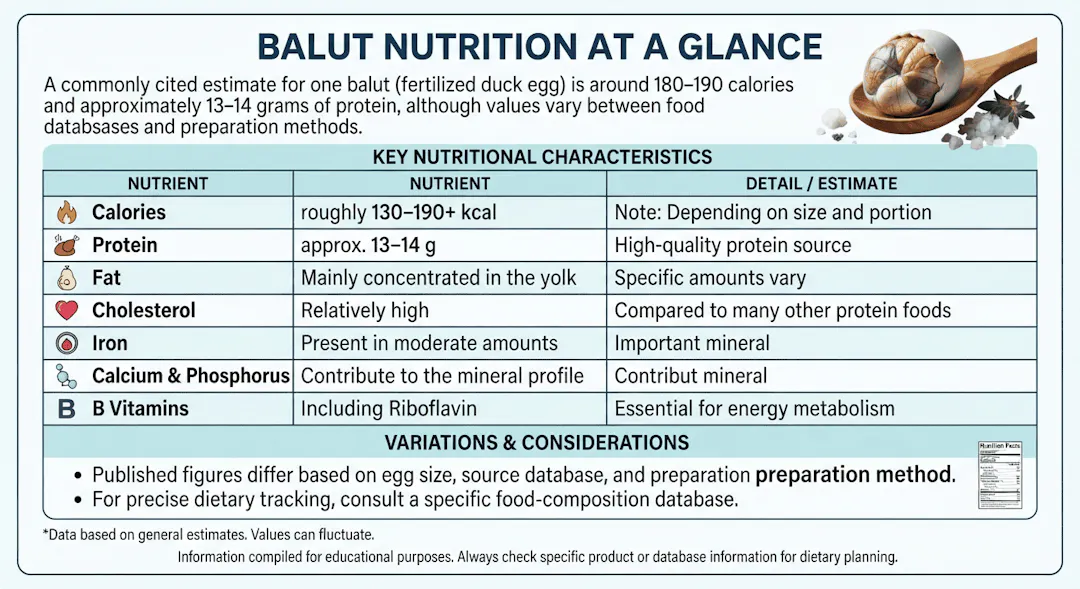
A commonly cited estimate for one balut is around 180–190 calories and approximately 13–14 grams of protein, although values vary between food databases and preparation methods. One U.S. National Heart, Lung, and Blood Institute nutrition handout, for example, lists a 70-gram balut at 130 calories, while other references report higher values for a whole edible egg.
The most important nutritional characteristics of balut are:
- Calories: roughly 130–190+ kcal, depending on size and the portion measured
- Protein: approximately 13–14 g in commonly cited estimates
- Fat: mainly concentrated in the yolk
- Cholesterol: relatively high compared with many other protein foods
- Iron: present in moderate amounts
- Calcium and phosphorus: contribute to the mineral profile
- B vitamins: including riboflavin and other nutrients associated with energy metabolism
Because published figures differ, it is best to use a specific food-composition database when precise dietary tracking is required.
How Many Calories Are in Balut?
Balut calories depend on the size of the egg and how the nutritional value is measured. A commonly cited figure is approximately 188 calories per balut, while a U.S. NHLBI educational nutrition label lists a 70-gram balut at 130 calories. This difference illustrates why a single calorie number should not be treated as universal.
Most of the energy in balut comes from its protein and fat rather than carbohydrates. The yolk is particularly important because it contains a substantial proportion of the egg's fat and energy. For someone tracking calories, the practical approach is to consider one whole balut as a moderately energy-dense food rather than assuming that every egg contains exactly the same number of calories.
How Much Protein Does Balut Have?
Balut protein is one of its main nutritional advantages. Commonly cited nutrition references put the protein content of one balut at around 13–14 grams, although the amount varies with egg size and the edible portion being measured. Protein is needed for:
- Maintaining and repairing body tissues
- Supporting muscles
- Producing enzymes and hormones
- Maintaining normal immune function
- Supporting overall growth and development
Balut contains protein from both the egg components and the developing embryo. Research on balut has also examined how nutrients and fatty acids are distributed between the yolk, embryo, albumen, and fluid portions.
For people looking for protein-rich foods, balut can therefore contribute meaningful protein to a meal. However, it should be considered as one part of an overall varied diet rather than a special or superior source of protein.
Balut Iron and Other Minerals
Balut also contains several minerals, including iron, calcium, and phosphorus. A Philippine Food Composition Table entry for fertilized duck egg white lists 1.5 mg of iron per 100 grams, along with calcium and phosphorus. However, this entry represents a specific edible component rather than a universal nutritional profile for an entire mature balut, so it should not be used as the definitive iron value for every egg.
Iron is important because the body uses it to produce hemoglobin and support normal oxygen transport. Balut can contribute iron to the diet, but it should not be described as a treatment for iron deficiency or anemia. The amount of iron and other minerals can vary according to the egg, incubation stage, and edible portions consumed.
Balut Cholesterol: Is It High?
Balut cholesterol is one of the most important nutritional considerations when evaluating the food. Egg yolks naturally contain substantial dietary cholesterol, and balut includes the yolk as well as other developing egg components. Some nutrition references report several hundred milligrams of cholesterol for a whole balut, although the exact amount depends on the egg and the database used.
It is important to distinguish dietary cholesterol from blood cholesterol. Dietary cholesterol is the cholesterol present in food, while LDL and HDL are measurements of cholesterol carried in the blood. Current American Heart Association guidance emphasizes the overall dietary pattern, particularly the balance of saturated and unsaturated fats, rather than treating dietary cholesterol as the only factor affecting cardiovascular health. For most people, dietary cholesterol is no longer considered the primary target for cardiovascular risk reduction.
However, people with high LDL cholesterol, certain medical conditions, or specific dietary restrictions may need individualized advice from a healthcare professional.
What Types of Fat Are in Balut?
The majority of balut's fat is associated with the yolk. Research examining balut from mallard ducks found that the yolk contains the highest concentration of fat, while the embryo contains a smaller amount and the albumen and fluid portions contain relatively little. The researchers identified oleic, palmitic, stearic, and linoleic acids among the major fatty acids.
The balance of fatty acids can also vary with the incubation stage and duck breed. A 2023 study comparing 15-day and 18-day balut found measurable differences in saturated, monounsaturated, and polyunsaturated fatty acids between samples. This is one reason it is better to discuss balut's overall fat profile than to describe it simply as either a "healthy fat" or "unhealthy fat" food.
What Vitamins and Nutrients Does Balut Contain?
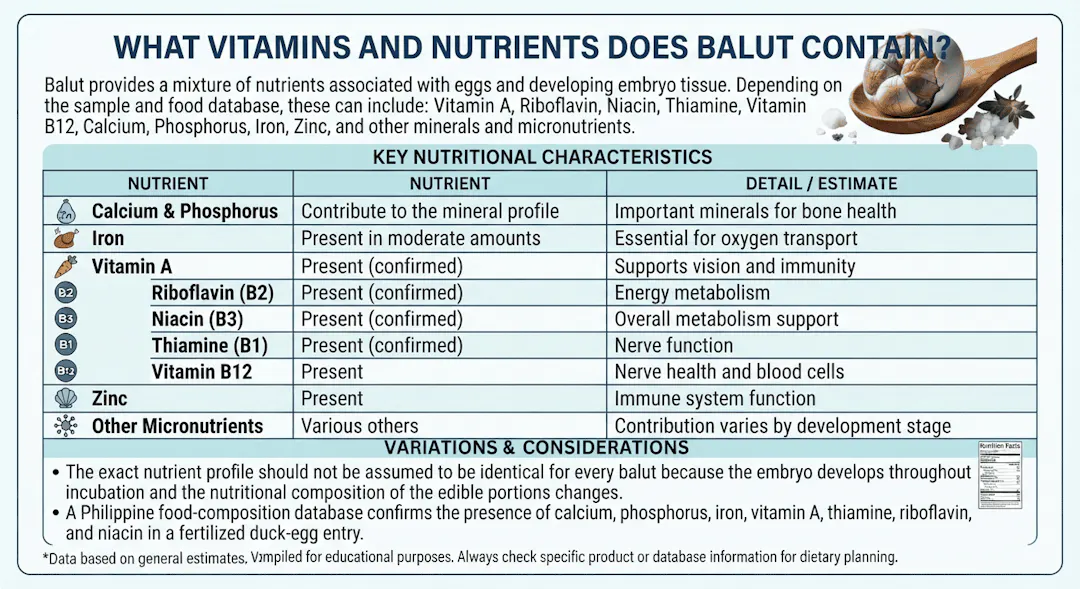
Balut provides a mixture of nutrients associated with eggs and developing embryo tissue. Depending on the sample and food database, these can include:
- Vitamin A
- Riboflavin
- Niacin
- Thiamine
- Vitamin B12
- Calcium
- Phosphorus
- Iron
- Zinc
- Other minerals and micronutrients
A Philippine food-composition database confirms the presence of calcium, phosphorus, iron, vitamin A, thiamine, riboflavin, and niacin in a fertilized duck-egg entry.
The exact nutrient profile should not be assumed to be identical for every balut because the embryo develops throughout incubation and the nutritional composition of the edible portions changes.
Is Balut Healthy?
So, is balut healthy? The most accurate answer is: balut can be part of a balanced diet, but whether it is a good choice depends on the individual and the rest of the diet.
Balut provides protein and a range of micronutrients, making it more nutritionally substantial than simply treating it as a novelty food. At the same time, it is relatively energy-dense and contains a significant amount of dietary cholesterol.
A balanced way to think about balut is to consider:
- Protein: a useful contribution to daily protein intake
- Micronutrients: provides several vitamins and minerals
- Calories: contributes a meaningful amount of energy
- Fat: concentrated mainly in the yolk
- Cholesterol: relatively high and worth considering for people monitoring cholesterol intake
- Overall diet: matters more than judging the food in isolation
The American Heart Association's current dietary guidance emphasizes vegetables, fruits, whole grains, healthy protein sources, and unsaturated fats while limiting saturated fat and highly processed foods.
Balut Health Benefits
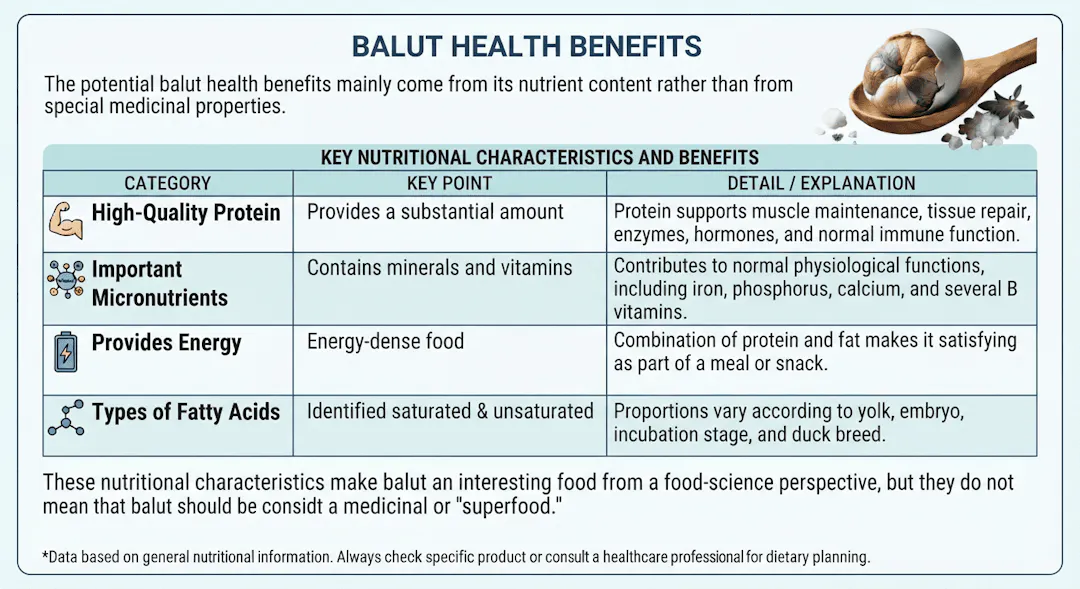
The potential balut health benefits mainly come from its nutrient content rather than from special medicinal properties.
1. Provides High-Quality Protein
Balut can provide a substantial amount of protein in a relatively small serving. Protein supports muscle maintenance, tissue repair, enzymes, hormones, and normal immune function.
2. Provides Important Micronutrients
Balut contains minerals and vitamins that contribute to normal physiological functions, including iron, phosphorus, calcium, and several B vitamins.
3. Provides Energy
Its combination of protein and fat makes balut an energy-dense food. This can make it satisfying as part of a meal or snack.
4. Provides Different Types of Fatty Acids
Research has identified both saturated and unsaturated fatty acids in balut, with the proportions varying according to the yolk, embryo, incubation stage, and duck breed.
These nutritional characteristics make balut an interesting food from a food-science perspective, but they do not mean that balut should be considered a medicinal or "superfood."
Balut Health Risks and Dietary Considerations
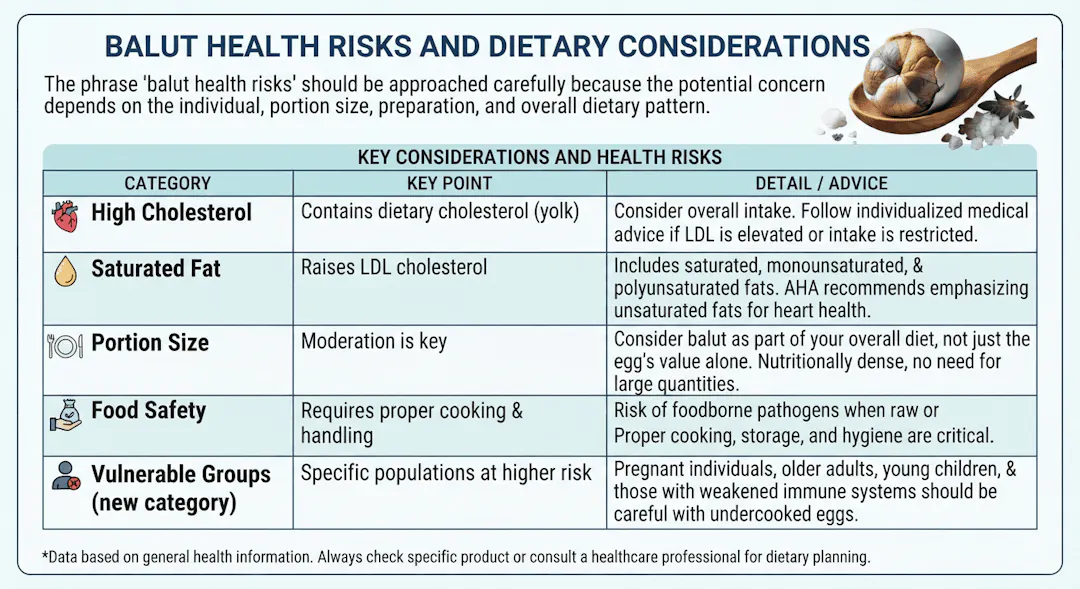
The phrase "balut health risks" should be approached carefully because the potential concern depends on the individual, portion size, preparation, and overall dietary pattern.
High Cholesterol
Balut can be high in dietary cholesterol because it contains the yolk. People who have elevated LDL cholesterol or have been advised to limit dietary cholesterol should consider their overall intake and follow individualized medical advice.
Saturated Fat
Balut contains saturated fat as well as monounsaturated and polyunsaturated fats. Too much saturated fat can raise LDL cholesterol, which is why the American Heart Association recommends emphasizing unsaturated fats instead of saturated fats as part of a heart-healthy dietary pattern.
Portion Size
A nutritionally dense food does not need to be eaten in large quantities to be useful. If you enjoy balut regularly, consider it as part of your overall diet rather than focusing on the nutritional value of the egg alone.
Food Safety
Balut should be properly cooked and handled safely. Eggs and egg products can carry foodborne pathogens when raw or undercooked, so proper cooking, storage, and hygiene are important.
People who are pregnant, older adults, young children, or individuals with weakened immune systems may need to be particularly careful about consuming undercooked eggs and should follow appropriate food-safety guidance.
Balut vs. Regular Eggs
Balut and ordinary duck or chicken eggs share many nutritional characteristics because they are both eggs. The major difference is that balut has been incubated long enough for the embryo to develop before the egg is cooked.
During this process, the components of the egg change as nutrients from the yolk and albumen are used by the developing embryo.
Research on balut has shown that fat content is concentrated primarily in the yolk, while the embryo contributes additional tissue and nutrients to the edible portion. The fatty-acid composition can also change according to the stage of embryonic development.
This means it is misleading to assume that balut automatically contains dramatically more of every nutrient than an ordinary egg.
Balut in Vietnamese Food Culture
In Vietnam, balut is commonly known as hột vịt lộn and is more than a source of nutrients. It is part of the country's street-food culture and is often enjoyed with rau răm (Vietnamese coriander), salt, pepper, and other seasonings.
The cultural context is important when discussing balut nutrition. Vietnamese food traditions often emphasize the balance of flavors, textures, herbs, and accompaniments rather than viewing individual foods purely through a nutritional lens.
Balut is also associated with traditional beliefs about nourishment and restoration. These cultural beliefs are important parts of Vietnamese food heritage, but they should be distinguished from modern clinical evidence. Nutritional science does not establish balut as a treatment for anemia, illness, postpartum recovery, or other medical conditions.
How to Include Balut in a Balanced Diet
If you enjoy balut, there is no need to treat it as either a miracle food or a food that must be completely avoided.
A balanced approach is to:
- Enjoy it in reasonable portions.
- Pair it with vegetables or fresh herbs.
- Consider the rest of your day's protein and fat intake.
- Pay attention to dietary cholesterol if you have been advised to monitor it.
- Choose properly cooked eggs from reputable sources.
- Maintain variety by eating different protein sources and nutrient-rich foods.
The American Heart Association recommends an overall dietary pattern centered on vegetables, fruits, whole grains, healthy protein sources, and unsaturated fats rather than judging health based on a single food.
The Bottom Line
Balut is a nutrient-containing traditional food rather than simply a culinary curiosity. It provides protein, fat, minerals, and vitamins, with commonly cited estimates placing one egg at roughly 130–190 calories and around 13–14 grams of protein, although nutritional values vary between sources and serving sizes.
Its main nutritional considerations are its energy density, fat content, and relatively high dietary cholesterol. For most people, the better question is not whether balut is simply "healthy" or "unhealthy," but how it fits into the overall diet.
For travelers exploring Vietnamese cuisine, balut also offers a useful introduction to the connection between food, culture, and everyday life in Vietnam. Enjoyed in moderation and prepared safely, it can be appreciated both for its distinctive cultural identity and its nutritional contribution.
Read more: Balut (Hột Vịt Lộn)

By Roy Trinh
Editor
Roy Trinh is a travel writer and destination expert at Go Visit Vietnam, dedicated to helping travelers discover the beauty, culture, and diversity of Vietnam. Through well-researched travel guides, practical itineraries, local insights, and authentic recommendations, Roy shares valuable information to inspire memorable journeys across the country. From vibrant cities and breathtaking landscapes to regional cuisine and cultural heritage, every guide is created to help visitors experience Vietnam with confidence and curiosity.
Frequently Asked Questions About Balut Nutrition
How many calories are in one balut?
Published estimates vary depending on egg size and the portion measured. Commonly cited figures are around 130–190 calories per egg, so a specific food-composition database should be used when precise calorie tracking is important.
How much protein does balut have?
A commonly cited estimate is approximately 13–14 grams of protein per balut. The actual amount varies according to egg size, incubation stage, and the edible portion included.
Is balut high in cholesterol?
Yes. Balut contains the yolk and can therefore provide a substantial amount of dietary cholesterol. The exact amount varies by egg and preparation. People who need to manage LDL cholesterol should consider balut within their overall dietary pattern.
Is balut rich in iron?
Balut contains iron, although the amount varies by sample and food database. A Philippine food-composition entry for fertilized duck egg white reports 1.5 mg of iron per 100 grams. This should not be interpreted as the universal iron content of a whole balut.
Is balut healthy for you?
Balut can provide protein, minerals, vitamins, and energy, but it is also relatively high in cholesterol and contains fat. Whether it fits well into your diet depends on your nutritional needs, health status, portion size, and overall eating pattern.
Does balut have nutritional value?
Yes. Balut provides protein, fat, minerals, and several vitamins. Its nutritional composition is influenced by the egg's size, incubation stage, duck breed, and preparation method.
Advertising box
Explore More About Balut (Hột Vịt Lộn)
Discover everything you need to know about Balut (Hột Vịt Lộn), one of Vietnam's most iconic and intriguing street foods. Learn what balut is, how it's made, what it tastes like, how locals eat it, its nutritional value, and the cultural traditions behind this unique delicacy. Whether you're preparing to try balut for the first time or simply want to understand its place in Vietnamese cuisine, explore our expert guides covering every aspect of this unforgettable culinary experience.
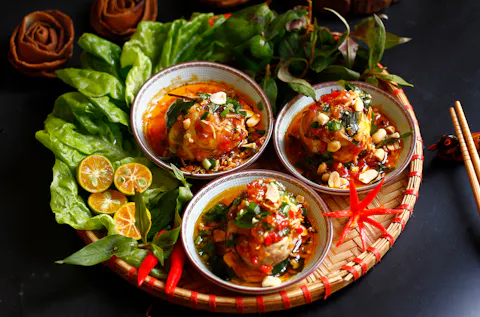
What Is Balut? Vietnam's Fertilized Duck Egg Explained
Discover the fascinating story behind balut—known in Vietnam as hột vịt lộn—one of Southeast Asia's most iconic and nutrient-dense street food delicacies. This comprehensive guide explores the precise incubation science of the fertilized duck egg, compares regional differences between Filipino and Vietnamese preparations, and breaks down the unique sensory blend of rich broth, creamy yolk, and tender embryo. Learn the traditional step-by-step etiquette for eating balut like a local alongside fresh herbs and pepper-lime dipping salt.
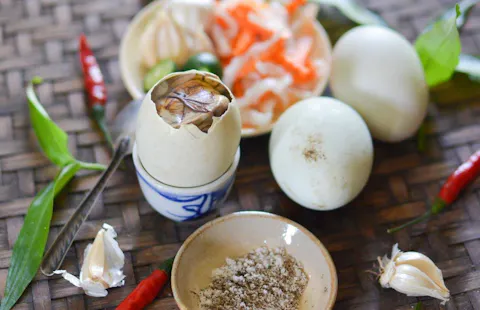
Is Balut Healthy? Nutrition, Benefits & Things to Know
Delve into the scientific and biochemical profile of one of Southeast Asia's most famous street food delicacies: the fertilized duck egg (hột vịt lộn). This comprehensive nutritional guide breaks down balut's caloric density, complete amino acid structure, high biological value protein, bio-available heme iron, and essential vitamins like A and B12. Explore its historical reputation as a vitality tonic alongside objective dietary considerations, including cholesterol management, microbial food safety, and ideal consumption protocols.
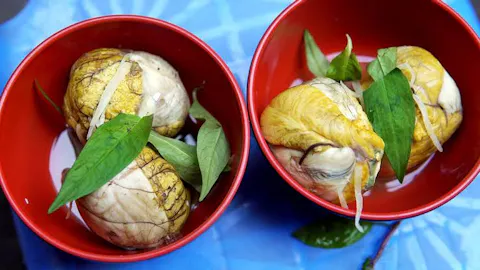
What Does Balut Taste Like? Flavor, Texture & What to Expect
Uncover the true taste profile of one of Southeast Asia's most intriguing street food delicacies: the fertilized duck egg (hột vịt lộn). Moving past visual expectations, this sensory guide deconstructs balut’s complex flavor layering—from its warm, savory poultry consommé broth and velvety, custard-like yolk to the tender, braised duck meatiness of the embryo. Learn how traditional accompaniments like peppery rau răm herbs and citrusy lime-pepper salt create a perfectly balanced, delicious culinary experience.
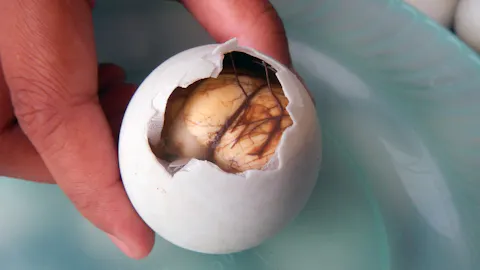
How to Eat Balut: A Step-by-Step Guide for First-Time Visitors
Master the art of eating balut (hột vịt lộn) like a local with this comprehensive step-by-step dining guide. Learn the proper technique for cracking the shell's air cell, sipping the warm, savory duck broth, and applying the essential pepper-lime salt dip (muối tiêu chanh). Discover how to pair creamy yolk and tender duck embryo with fresh rau răm (Vietnamese coriander) herbs, navigate table etiquette, and enjoy one of Vietnam’s most iconic street food rituals with confidence.
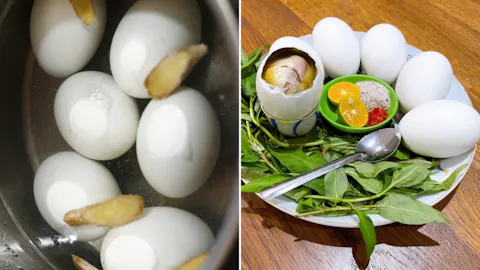
Balut Recipe: How to Cook & Eat Vietnamese Balut
Learn how to cook and enjoy balut, Vietnam’s famous fertilized duck egg, at home. This guide explains the essential ingredients, cooking time, traditional Vietnamese seasonings, and simple steps for serving balut with rau răm, ginger, salt, pepper, and lime. You’ll also discover what balut tastes like, how locals eat it, and popular variations such as hột vịt lộn xào me. Whether you’re curious about Vietnamese street food or want to recreate this traditional dish, this guide makes preparing balut simple and approachable.
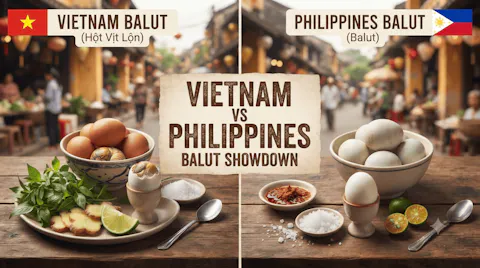
Vietnam Balut vs Philippines Balut: Key Differences Explained
Explore the fascinating comparative gastronomy between Vietnam’s hột vịt lộn and the Philippines' famous balut. This comprehensive guide breaks down the key differences between these two iconic street food traditions, analyzing incubation timelines (19–21 days in Vietnam vs. 16–18 days in the Philippines), sensory taste profiles, and textural variations. Learn how distinct seasoning philosophies—from Vietnamese lime-pepper salt (muối tiêu chanh) paired with peppery rau răm herbs to Filipino spiced vinegars—shape unique cultural dining rituals across Southeast Asia.