
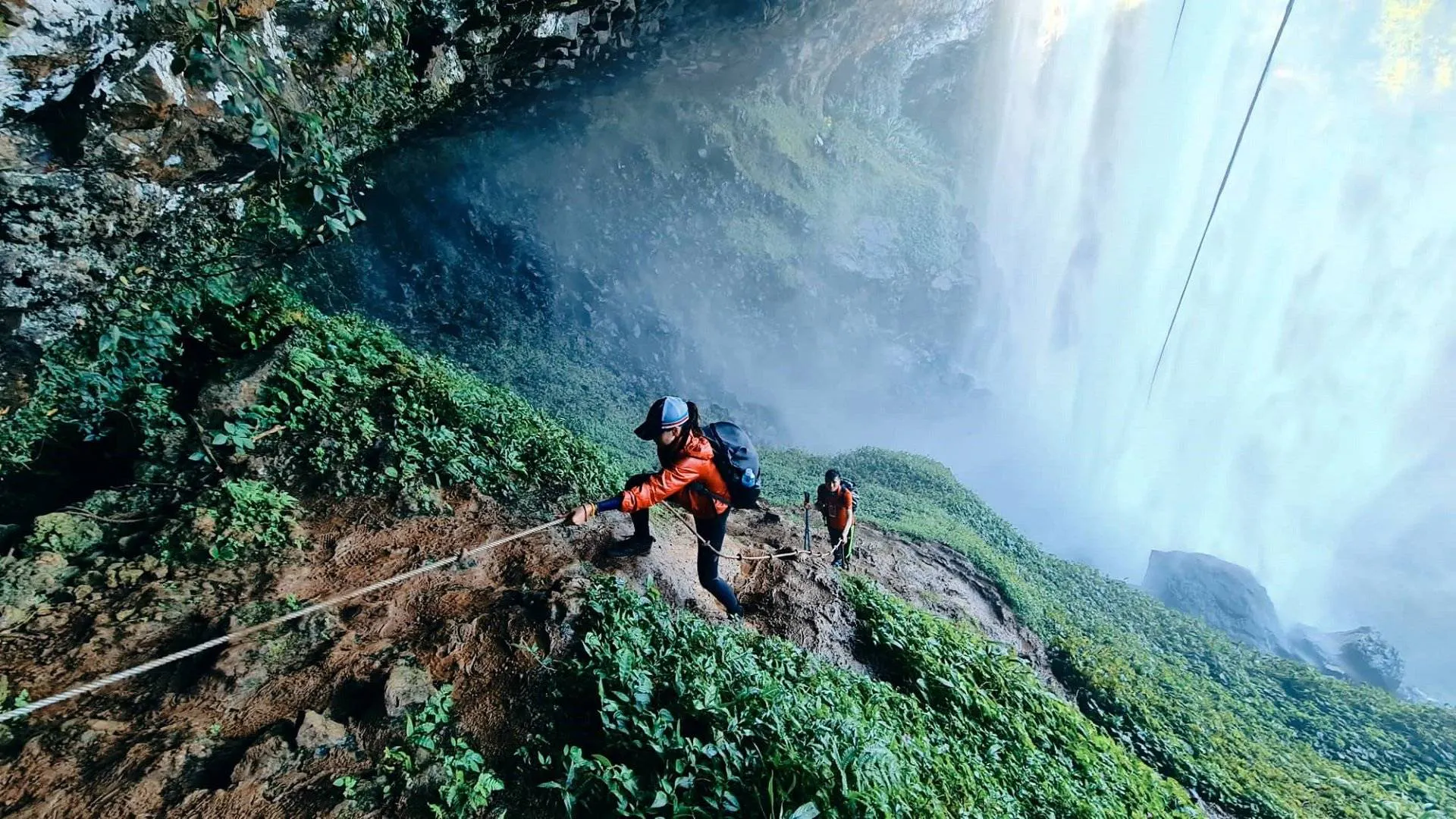
Hiking & Trekking in Vietnam: Best Trails, Routes & Travel Guide
Discover hiking and trekking in Vietnam through spectacular mountain trails, rice terraces, tropical forests, limestone karsts, national parks, and remote rural landscapes. From the famous Sapa and Fansipan trails to the rugged mountains of Ha Giang, jungle adventures in Phong Nha, and the scenic Ta Nang Phan Dung trek, Vietnam offers routes for different experience levels. Explore the best hiking destinations, trekking routes, seasons, difficulty levels, multi-day adventures, guided tours, safety advice, essential gear, and practical tips for planning your journey.
On this page
- Best Hiking & Trekking Destinations in Vietnam
- Best Hiking Routes in Vietnam for Beginners
- Best Trekking Routes for Experienced Hikers
- Best Multi-Day Trekking in Vietnam
- Best Time for Hiking & Trekking in Vietnam
- How Difficult Is Trekking in Vietnam?
- How Many Days Do You Need for Trekking in Vietnam?
- Hiking & Trekking Tours in Vietnam
- Hiking & Trekking Safety in Vietnam
- What to Pack for Trekking in Vietnam
- Hiking & Trekking Etiquette in Vietnam
- How to Choose the Right Trek in Vietnam
- Conclusion
Vietnam offers a remarkable variety of hiking and trekking experiences, from easy walks through rice fields to demanding multi-day adventures in remote mountain regions. Its diverse landscapes include terraced valleys, limestone karsts, tropical rainforests, national parks, coastal mountains, and highland trails.
The best hiking destinations in Vietnam include Sapa, Fansipan, Ha Giang, Pu Luong, Cao Bang, Ba Be, Phong Nha, Cuc Phuong, Cat Ba, and Ta Nang Phan Dung. Each destination offers a different combination of scenery, culture, terrain, and difficulty.
Whether you are a beginner looking for a short countryside hike or an experienced trekker planning a challenging mountain expedition, Vietnam has trails to match different interests and fitness levels. This guide covers the best hiking and trekking destinations, recommended routes, difficulty levels, best seasons, multi-day adventures, guided tours, safety advice, and essential preparation tips.
Best Hiking & Trekking Destinations in Vietnam
Vietnam's hiking trails range from accessible national park paths to remote mountain routes that require professional guides and careful preparation.
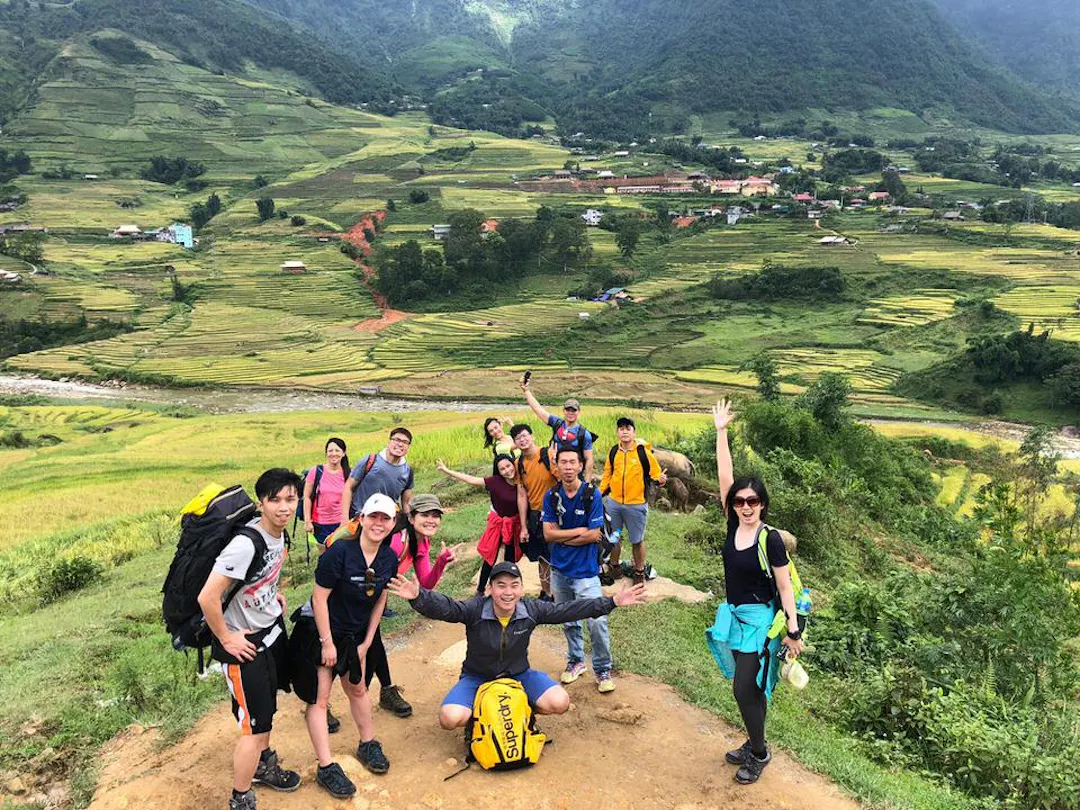
Sapa Trekking
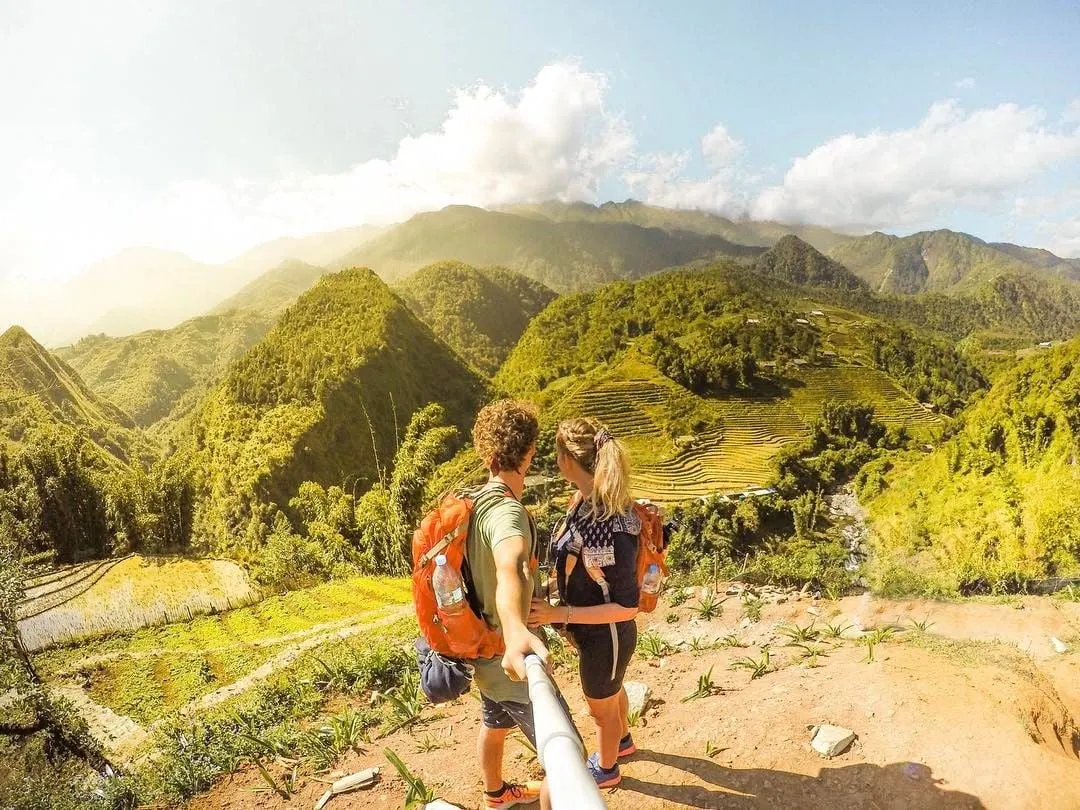
Sapa is one of the most popular trekking destinations in Vietnam, known for dramatic rice terraces, mountain valleys, and ethnic minority villages.
Many Sapa trekking routes pass through the Muong Hoa Valley, where trails connect villages surrounded by steep green mountains and terraced fields. Popular areas include Lao Chai, Ta Van, Y Linh Ho, and nearby villages inhabited by Hmong, Red Dao, and Giay communities.
The difficulty of Sapa trekking depends heavily on the route and weather. Short village walks can be suitable for beginners, while longer routes involving steep slopes and muddy trails require better fitness.
Trekking with a local guide can also provide valuable cultural context and help with navigation, particularly when exploring smaller trails away from the main tourist routes.
- Best for: Rice terraces, mountain scenery, village experiences, and cultural trekking.
- Difficulty: Easy to moderate, depending on the route.
- Typical duration: One to three days.
Fansipan Trekking
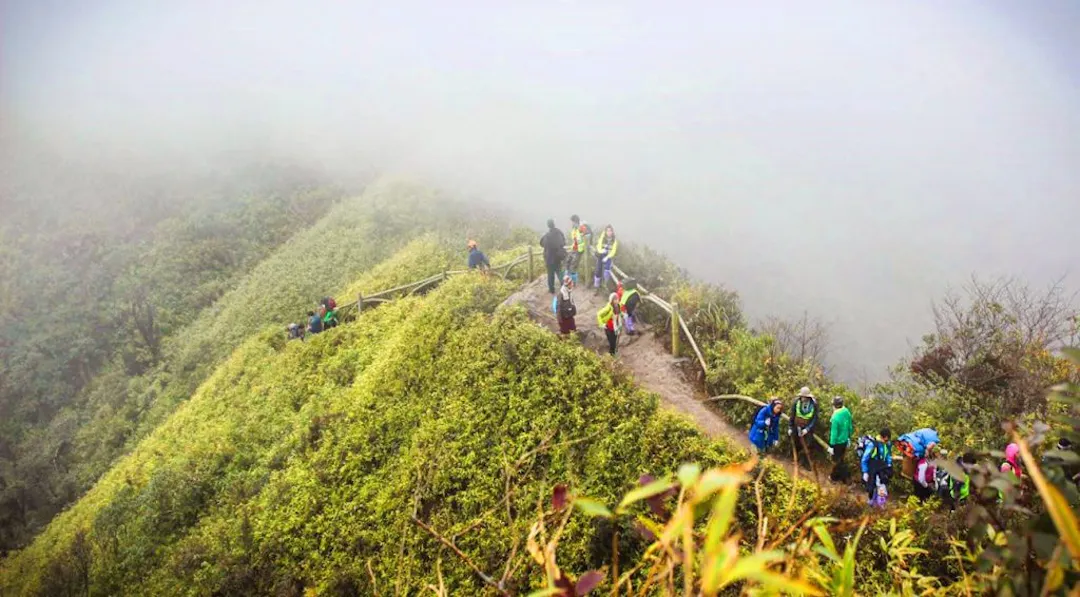
Fansipan is the highest mountain in Vietnam and one of the country's most challenging trekking destinations. The summit reaches approximately 3,147 meters above sea level in the Hoang Lien Son range.
Unlike the relatively gentle village walks around Sapa, Fansipan trekking involves significant elevation gain, steep sections, changing weather, and potentially difficult trail conditions.
Trekkers should be prepared for cooler temperatures at higher elevations and rapidly changing weather. Proper hiking footwear, warm layers, rain protection, sufficient water, and good physical conditioning are important.
Travelers should also understand that reaching Fansipan does not necessarily require trekking. The mountain can also be accessed by cable car, making it possible for visitors to experience the summit without completing a demanding hike.
For those specifically seeking a mountain trekking challenge, however, climbing Fansipan offers a very different experience from taking the cable car.
- Best for: Experienced hikers and high-altitude mountain adventures.
- Difficulty: Moderate to difficult.
- Typical duration: Usually one to two days, depending on the route and itinerary.
Ha Giang Trekking
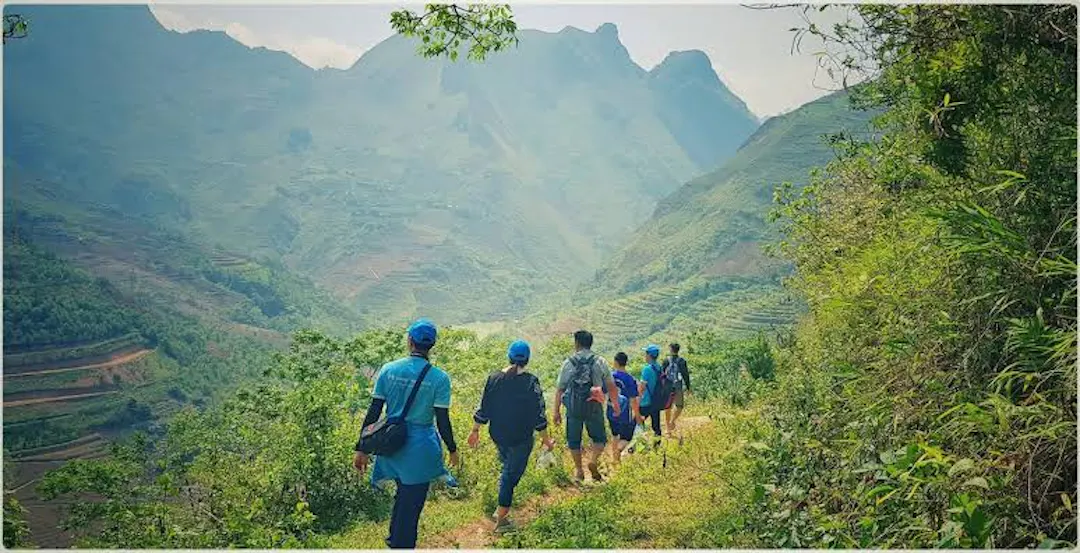
Ha Giang is famous for dramatic limestone mountains, deep valleys, winding roads, and remote communities in northern Vietnam.
While the province is widely associated with motorcycle trips, it also offers opportunities for hiking and trekking. Trails around the Dong Van Karst Plateau can lead through mountain villages, valleys, viewpoints, and rugged limestone landscapes.
The Dong Van Karst Plateau UNESCO Global Geopark is particularly impressive for hikers who want to combine geological scenery with cultural experiences.
Some trails involve steep slopes, exposed sections, rocky surfaces, and limited facilities. Weather can also change quickly in the mountains.
Because of the remote terrain, travelers should carefully consider using a local guide for longer or less-established routes.
- Best for: Mountain landscapes, remote villages, geology, and experienced trekkers.
- Difficulty: Moderate to difficult.
- Typical duration: One day to several days.
Pu Luong Trekking
Pu Luong is an excellent choice for travelers who want scenic trekking without the extreme difficulty of some northern mountain routes.
The landscape combines limestone mountains, rice terraces, forests, streams, traditional villages, and bamboo water wheels. Trails around villages such as Ban Don and Kho Muong provide opportunities to experience rural life while walking through the surrounding countryside.
Pu Luong is particularly appealing for travelers who want a combination of nature and cultural immersion. Many itineraries include overnight stays in local homestays, allowing visitors to experience village life after a day on the trail.
- Best for: Beginners, countryside trekking, rice terraces, and cultural experiences.
- Difficulty: Easy to moderate.
- Typical duration: One to three days.
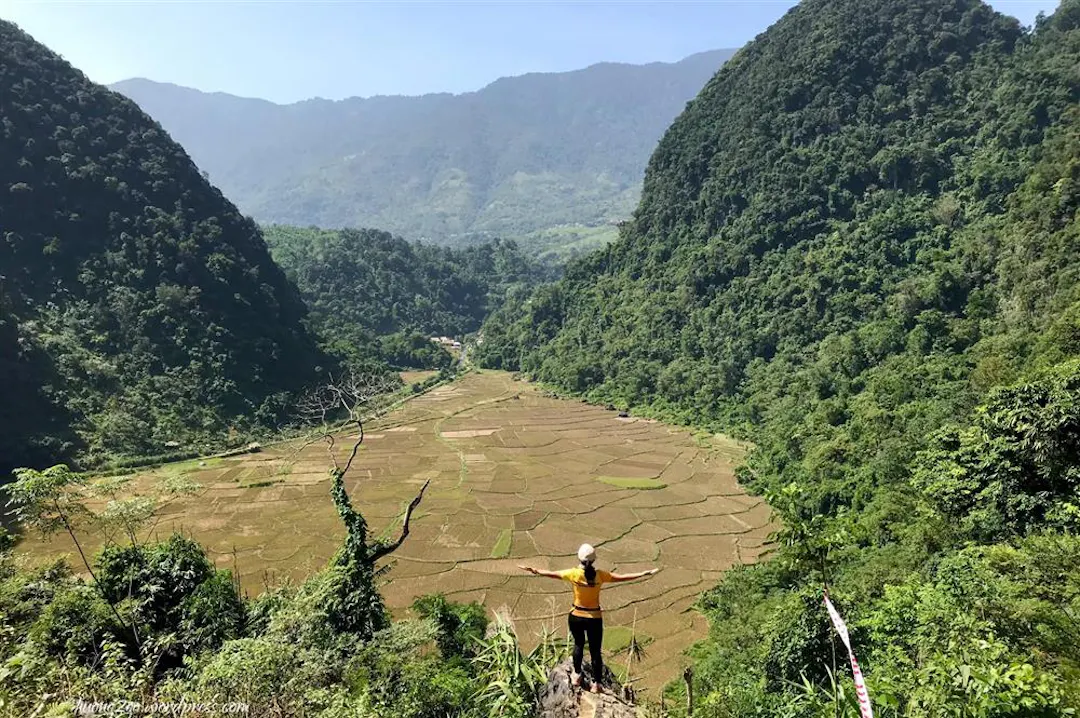
Cao Bang Trekking
Cao Bang in northeastern Vietnam offers a combination of limestone mountains, waterfalls, forests, valleys, and traditional villages.
Trekking around the province allows travelers to explore landscapes that are less developed for mass tourism than some of Vietnam's better-known destinations. The area around Ban Gioc Waterfall is particularly scenic, while rural trails connect agricultural communities and mountain valleys.
Cao Bang is a good choice for travelers who want to combine hiking with a broader northern Vietnam road trip.
- Best for: Waterfalls, karst landscapes, rural villages, and quieter trails.
- Difficulty: Easy to moderate, depending on the route.
- Typical duration: One to three days.
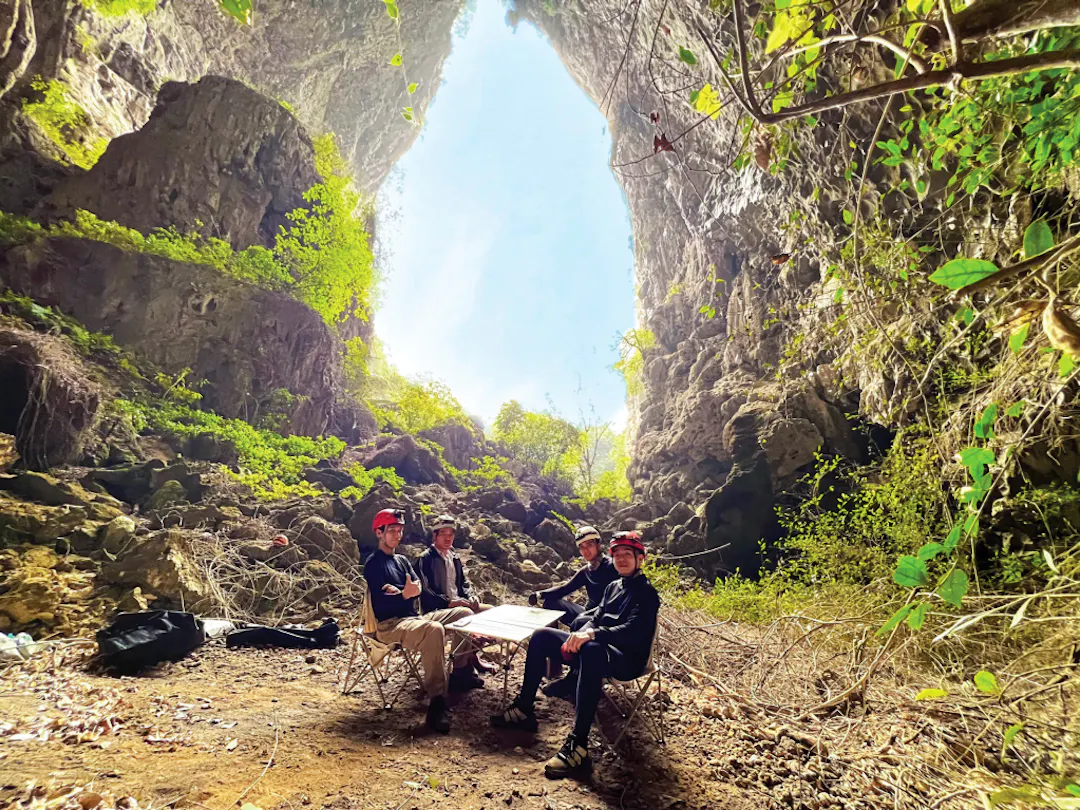
Ba Be Trekking
Ba Be National Park is centered around a large freshwater lake surrounded by limestone mountains and forest.
Trekking routes in the park allow visitors to combine hiking with boat trips, village visits, caves, and forest exploration. Trails can pass through dense vegetation and rural communities before reaching viewpoints or lakeside areas.
Staying in a local homestay can turn a short hike into a more immersive experience.
Ba Be is particularly suitable for travelers who want to experience northern Vietnam's natural environment without taking on the demanding climbs associated with Fansipan or Ha Giang.
- Best for: Forests, lakes, caves, villages, and nature-focused travel.
- Difficulty: Easy to moderate.
- Typical duration: One to two days.
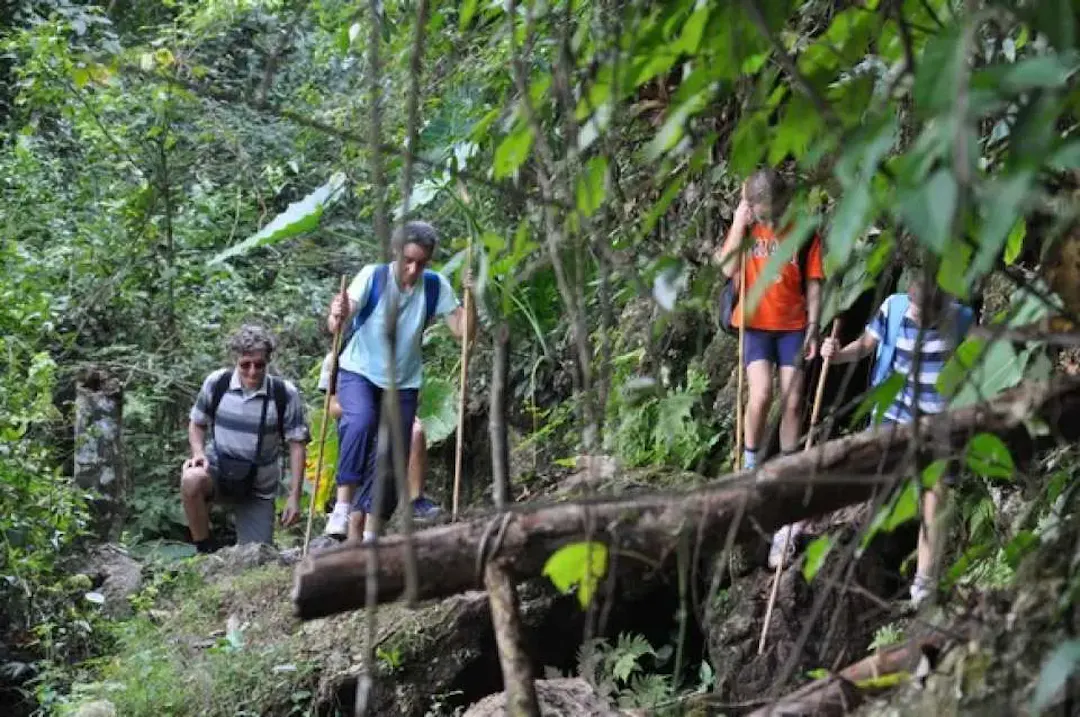
Phong Nha Trekking
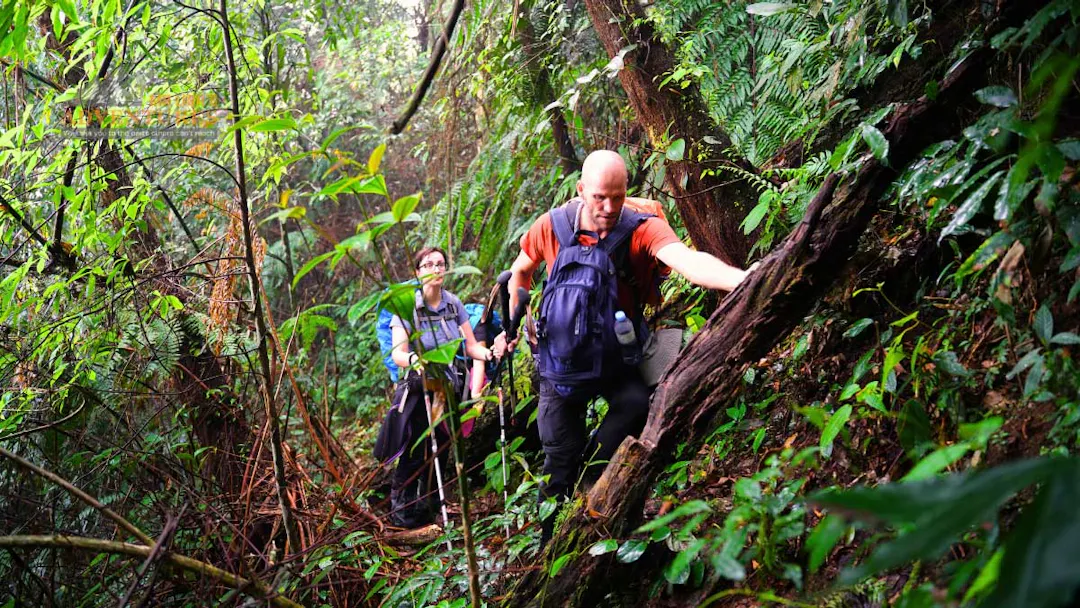
Phong Nha is one of Vietnam's most important destinations for jungle trekking and adventure travel. Located in Quang Binh province, Phong Nha-Ke Bang National Park combines tropical rainforest with an extensive limestone cave system.
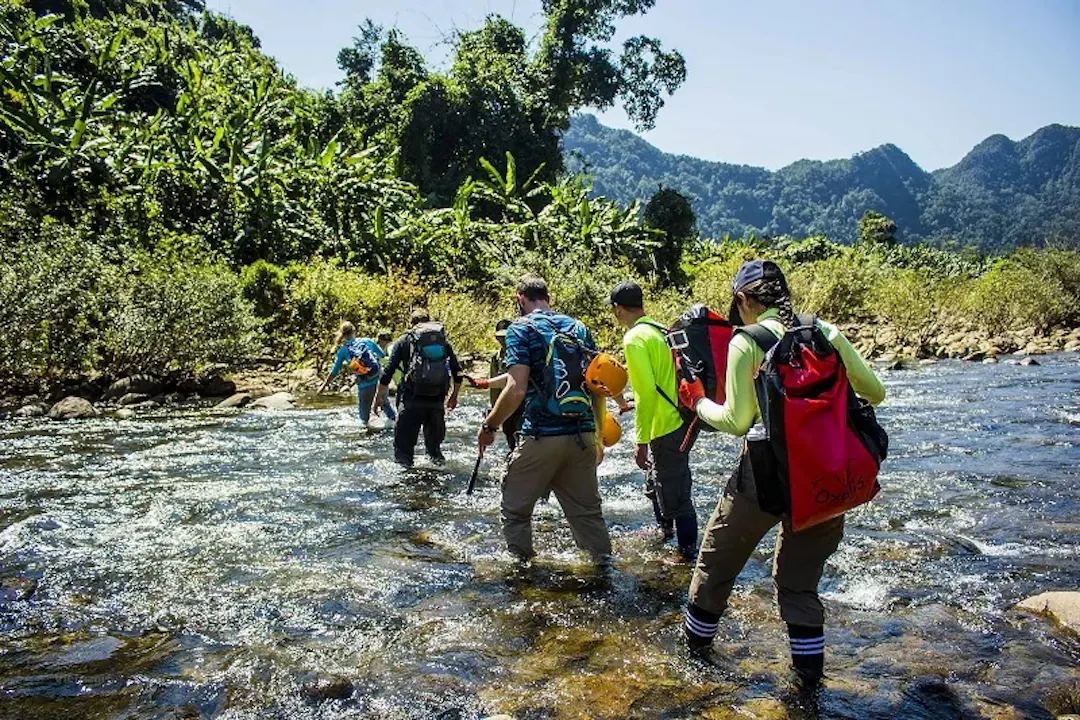
Trekking experiences can range from relatively accessible jungle walks to demanding multi-day expeditions involving river crossings, caves, camping, and remote forest terrain.
Adventure routes associated with areas such as Hang En and the Tu Lan cave system require considerably more preparation than a normal day hike. Some experiences also operate under controlled conditions and require organized tours.
Travelers should follow local regulations and environmental guidelines because the area's caves and forests are ecologically sensitive.
- Best for: Jungle trekking, caves, adventure expeditions, and experienced hikers.
- Difficulty: Moderate to difficult, depending on the route.
- Typical duration: One day to several days.
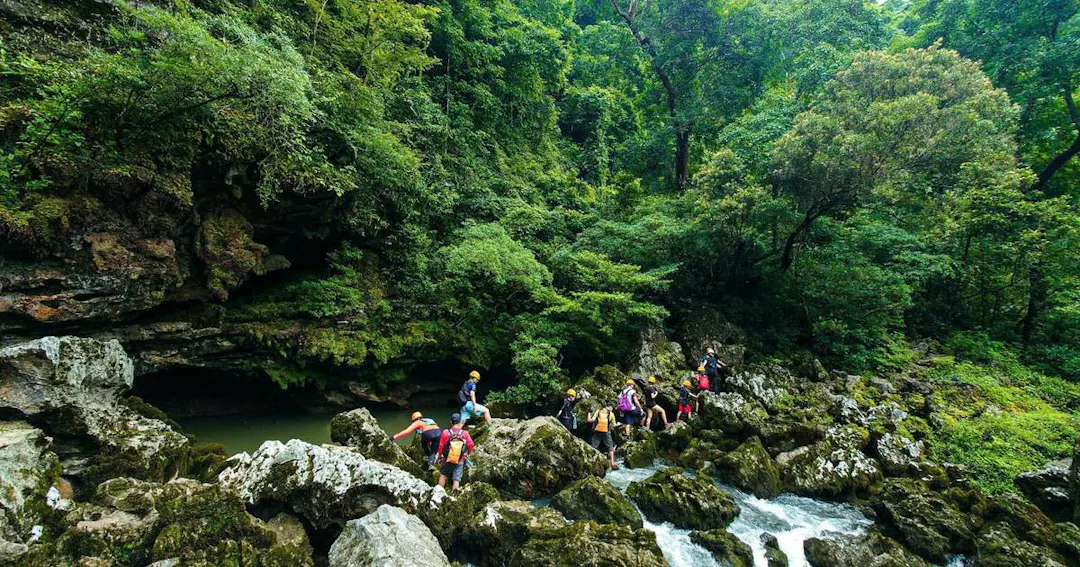
Cuc Phuong Hiking
Cuc Phuong National Park is one of Vietnam's best options for accessible rainforest hiking.
Located within a limestone landscape, the park contains dense forest, caves, ancient trees, and diverse wildlife. Several trails allow visitors to explore the forest without committing to a long wilderness expedition.
Cuc Phuong is a particularly good option for travelers who want to add a nature experience to a trip around northern Vietnam.
Hiking here can be combined with visits to conservation facilities, caves, and other attractions within the national park.
- Best for: Rainforest walks, wildlife, biodiversity, and beginners.
- Difficulty: Easy to moderate.
- Typical duration: Half day to two days.
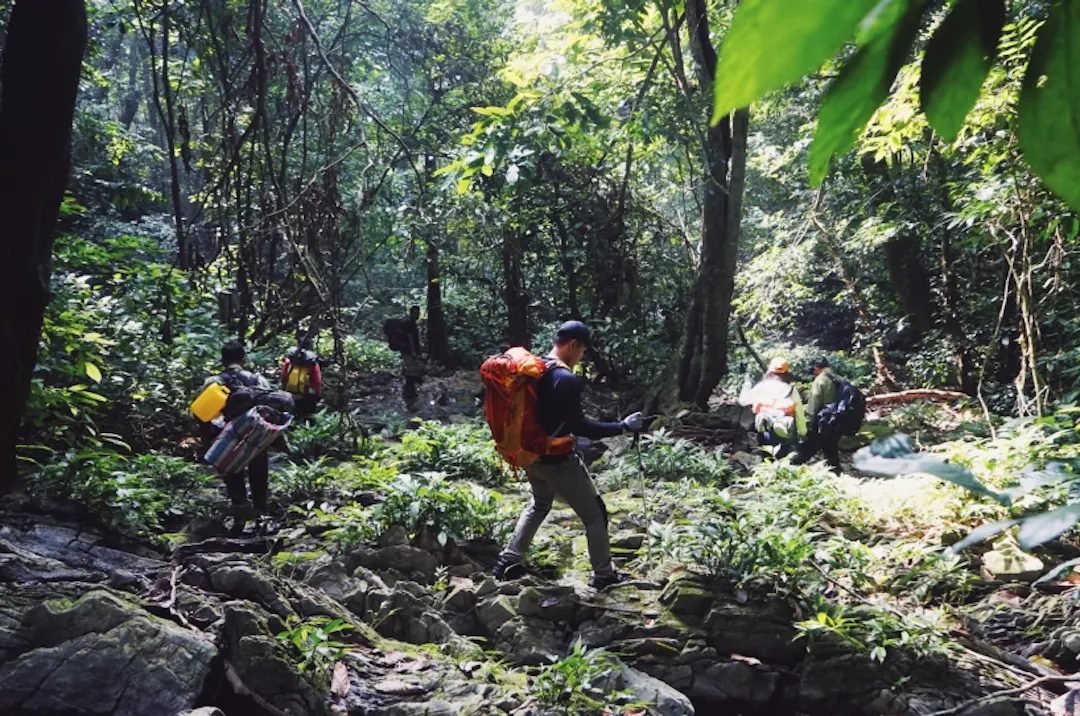
Cat Ba Hiking
Cat Ba offers a distinctive combination of mountain hiking, tropical forest, and coastal scenery.
Trails in Cat Ba National Park cross the island's rugged interior and include steep sections through subtropical forest. One popular viewpoint is Ngu Lam Peak, where hikers can see the surrounding limestone landscape.
Cat Ba is useful for travelers who want to combine hiking with beaches, boat trips, and island activities.
The terrain can be steep and slippery after rain, so appropriate footwear is recommended.
- Best for: Coastal scenery, national parks, island adventures, and day hikes.
- Difficulty: Easy to moderate.
- Typical duration: Half day to one day.
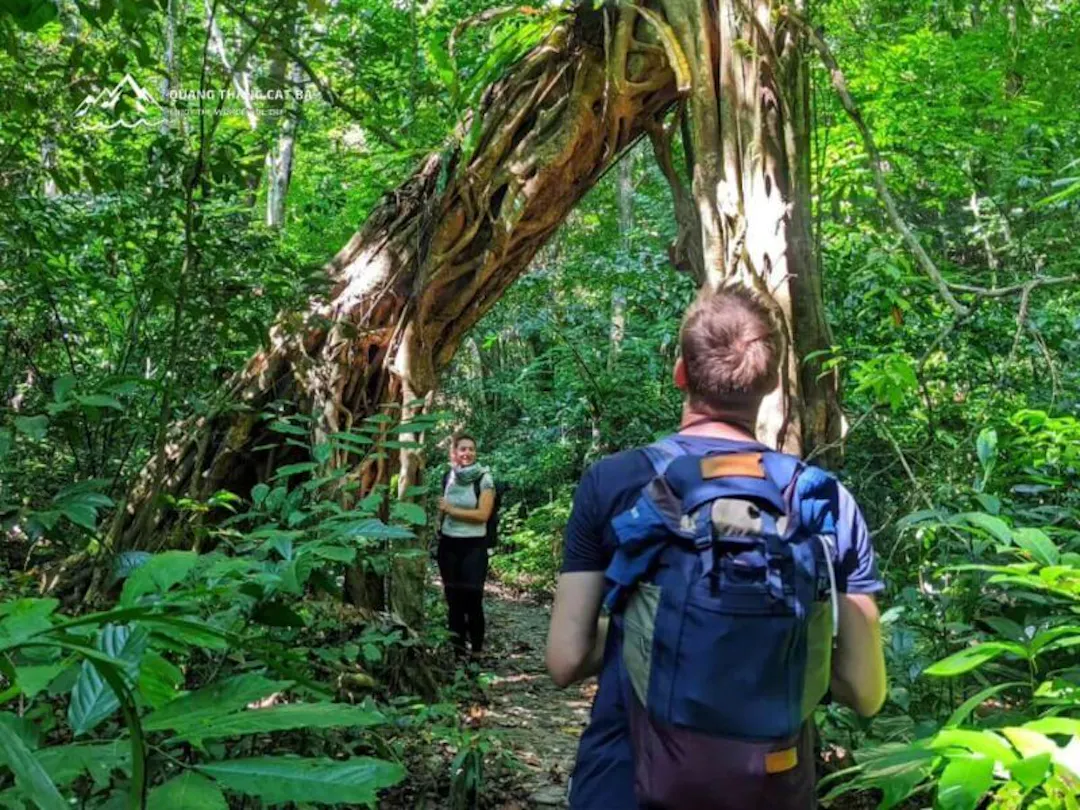
Ta Nang Phan Dung Trekking
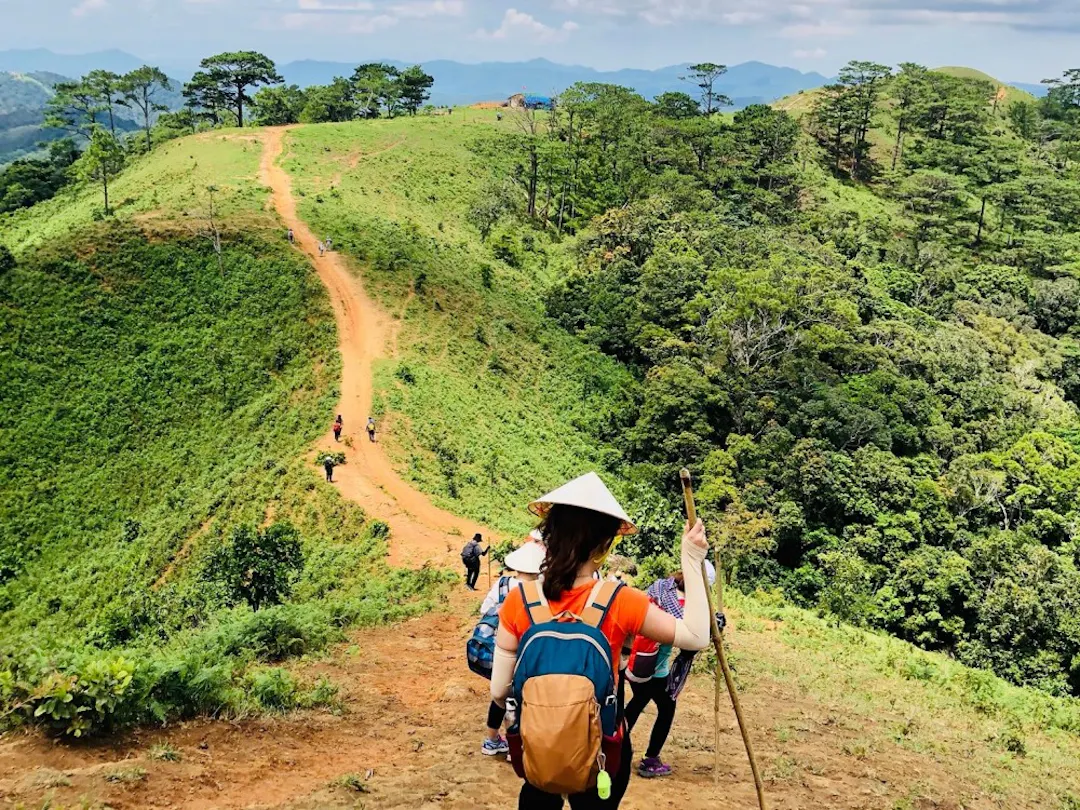
Ta Nang Phan Dung is one of Vietnam's best-known multi-day trekking adventures. The route passes through a changing landscape of highland forests, grass-covered ridges, valleys, and lower-elevation terrain.
Unlike short national park hikes, Ta Nang Phan Dung requires greater preparation. Weather, water availability, terrain, navigation, and camping arrangements all become important considerations.
During wet conditions, grassy slopes and trails can become slippery, while streams and river crossings may become more difficult. In dry weather, exposed sections can become hot and require careful hydration planning.
Because conditions can vary significantly, travelers should consider using experienced local guides and should confirm current route conditions before departure.
- Best for: Experienced hikers, camping, mountain scenery, and multi-day adventures.
- Difficulty: Difficult.
- Typical duration: Multi-day trek.
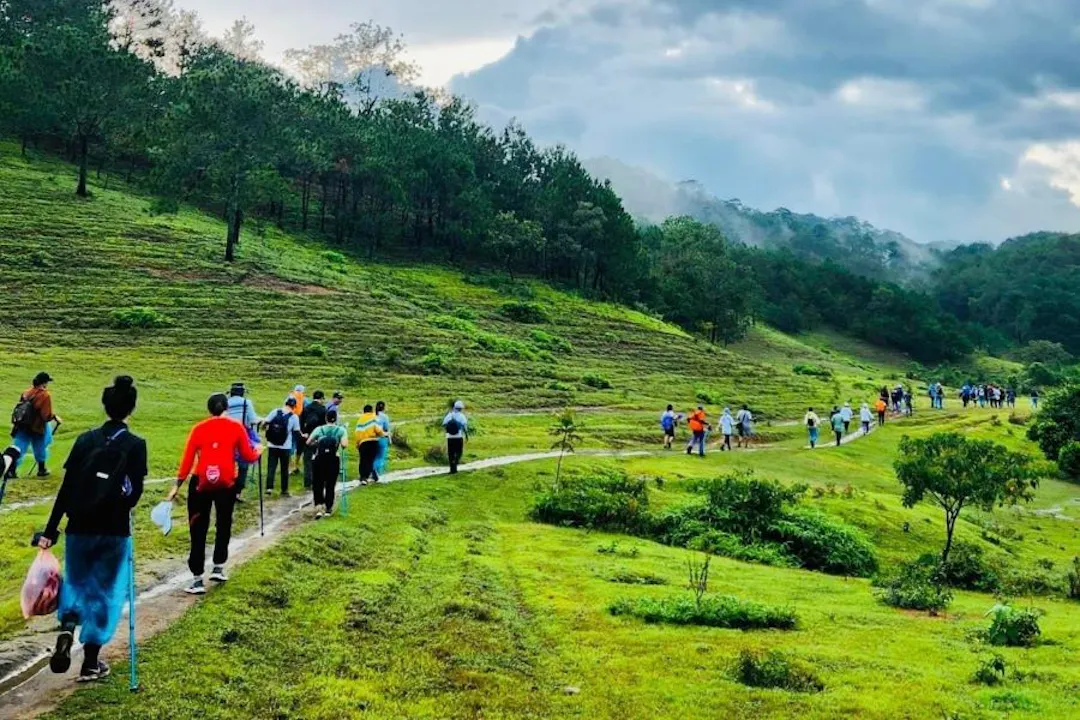
Best Hiking Routes in Vietnam for Beginners
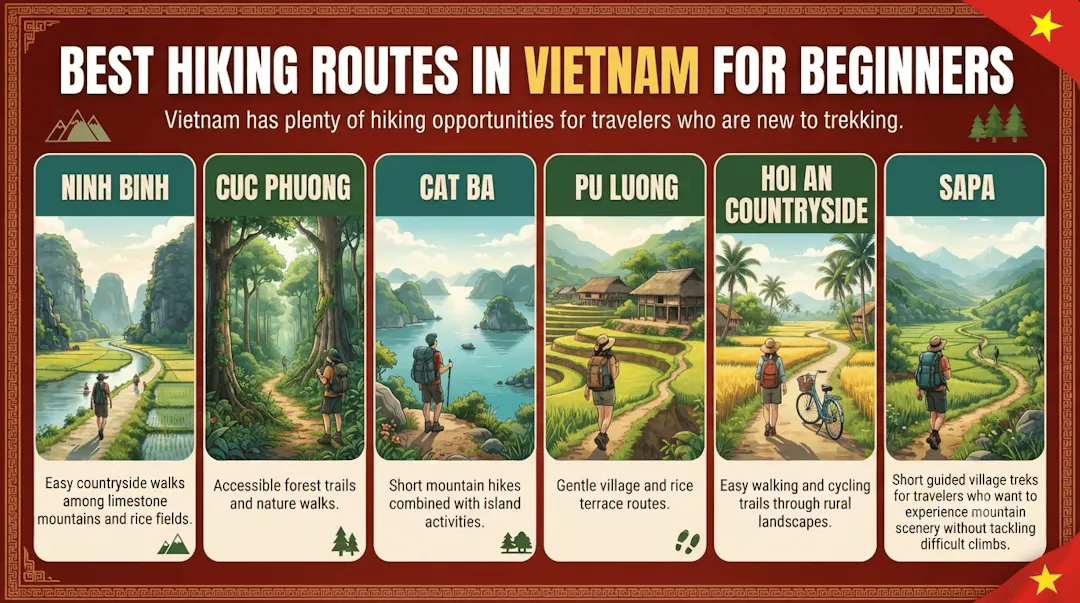
Vietnam has plenty of hiking opportunities for travelers who are new to trekking.
Good destinations for beginners include:
- Ninh Binh: Easy countryside walks among limestone mountains and rice fields.
- Cuc Phuong: Accessible forest trails and nature walks.
- Cat Ba: Short mountain hikes combined with island activities.
- Pu Luong: Gentle village and rice terrace routes.
- Hoi An countryside: Easy walking and cycling trails through rural landscapes.
- Sapa: Short guided village treks for travelers who want to experience mountain scenery without tackling difficult climbs.
Beginners should start with shorter routes and avoid choosing a destination based solely on scenery. Distance, elevation gain, weather, trail conditions, and access to assistance are equally important.
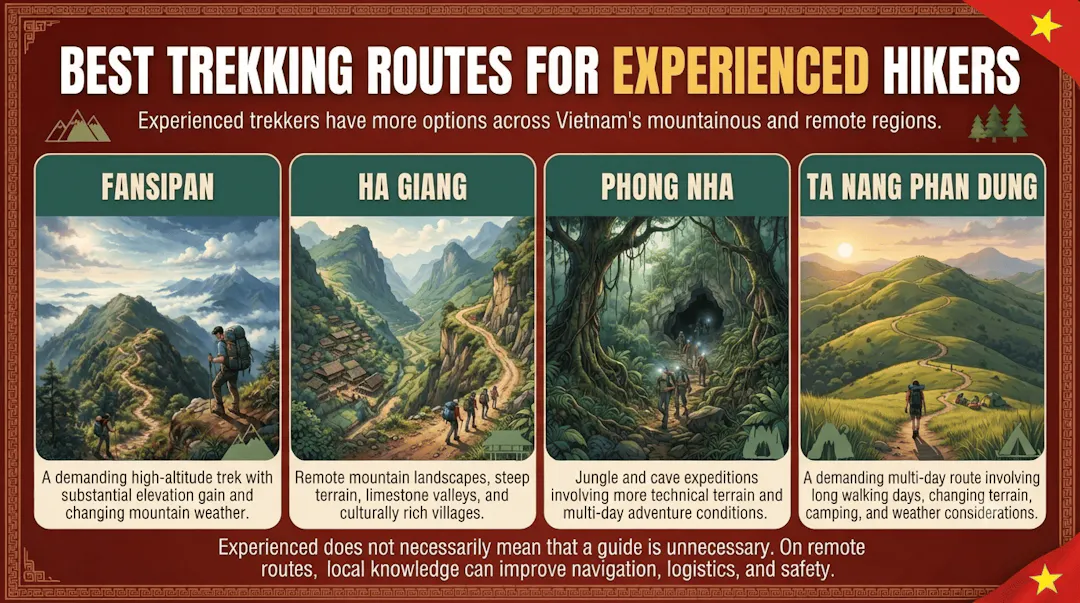
Best Trekking Routes for Experienced Hikers
Experienced trekkers have more options across Vietnam's mountainous and remote regions.
Fansipan
A demanding high-altitude trek with substantial elevation gain and changing mountain weather.
Ha Giang
Remote mountain landscapes, steep terrain, limestone valleys, and culturally rich villages.
Phong Nha
Jungle and cave expeditions involving more technical terrain and multi-day adventure conditions.
Ta Nang Phan Dung
A demanding multi-day route involving long walking days, changing terrain, camping, and weather considerations.
Experienced does not necessarily mean that a guide is unnecessary. On remote routes, local knowledge can improve navigation, logistics, and safety.
Best Multi-Day Trekking in Vietnam
Multi-day trekking offers a deeper experience than short day hikes because travelers spend more time in rural landscapes and mountain communities.
Some of the most interesting options include:
Sapa Multi-Day Trekking
Multi-day routes can connect several villages and valleys while allowing travelers to stay in local homestays.
Ha Giang Trekking
Longer itineraries can combine mountain hiking with cultural experiences across the Dong Van and Meo Vac areas.
Phong Nha Jungle Expeditions
Some organized adventures combine rainforest trekking, cave exploration, camping, and river crossings.
Ta Nang Phan Dung
A classic multi-day adventure for experienced trekkers seeking remote landscapes and camping.
When planning a multi-day trek, accommodation and food are only part of the preparation. Water, navigation, weather, emergency communication, transportation, and luggage management should also be considered.
Best Time for Hiking & Trekking in Vietnam
There is no single best season for hiking across the entire country. Vietnam stretches across several climate zones, so weather conditions vary considerably between regions.
Northern Vietnam
Sapa, Fansipan, Ha Giang, Cao Bang, and Ba Be can experience cooler conditions during the winter months.
The generally cooler and drier periods can be comfortable for trekking, but mountain weather can change quickly. Rain can make dirt and clay trails slippery, while high elevations can become cold and foggy.
Always check the local forecast before starting a mountain trek.
Central Vietnam
Phong Nha has a tropical climate and can experience significant rainfall during parts of the year.
For jungle and cave trekking, weather conditions can be particularly important because heavy rain may affect rivers, trails, and cave access.
Check current local conditions and tour operator updates before booking or starting an expedition.
Central Highlands and Southern Vietnam
The Central Highlands and southern regions can be hot, particularly during the warmer months. Early starts are often more comfortable for longer hikes.
For routes such as Ta Nang Phan Dung, seasonal rainfall can significantly affect trail conditions and river crossings.
How Difficult Is Trekking in Vietnam?
The difficulty of hiking in Vietnam varies from short, gentle walks to demanding wilderness expeditions.
Easy Hikes
Easy routes generally involve limited elevation gain, established trails, and shorter walking distances.
Good examples include:
- Cuc Phuong
- Cat Ba
- Ninh Binh
- Easy Pu Luong trails
- Short Sapa village walks
Moderate Treks
Moderate routes can involve longer distances, uneven terrain, regular climbs, and changing weather.
Examples include:
- Longer Sapa routes
- Pu Luong multi-day treks
- Ba Be trekking
- Selected Ha Giang trails
- Longer Cat Ba routes
Difficult Treks
Difficult routes require stronger physical preparation and greater attention to logistics.
Examples include:
- Fansipan
- Ta Nang Phan Dung
- Remote Ha Giang routes
- Selected Phong Nha jungle and cave expeditions
Difficulty is not determined by distance alone. Elevation gain, terrain, heat, humidity, water availability, navigation, and remoteness can all make a route more challenging.
How Many Days Do You Need for Trekking in Vietnam?
The length of your trek depends on your destination and travel goals.
One-Day Hiking
One-day adventures are ideal for beginners or travelers with limited time.
Good options include:
- Cuc Phuong
- Cat Ba
- Ninh Binh
- Short Sapa routes
- Short Pu Luong walks
Two to Three Days
Two- or three-day trips provide more time for cultural immersion and rural landscapes.
Good destinations include:
- Sapa
- Pu Luong
- Ba Be
- Phong Nha
- Ha Giang
Four to Six Days
Longer trips are more suitable for experienced trekkers who want to explore remote mountain environments.
Possible destinations include:
- Ha Giang
- Extended northern mountain routes
- Phong Nha adventure itineraries
Multi-Day Wilderness Treks
Routes such as Ta Nang Phan Dung and selected Phong Nha expeditions require more serious planning, especially for camping, food, water, navigation, and emergency support.
Hiking & Trekking Tours in Vietnam
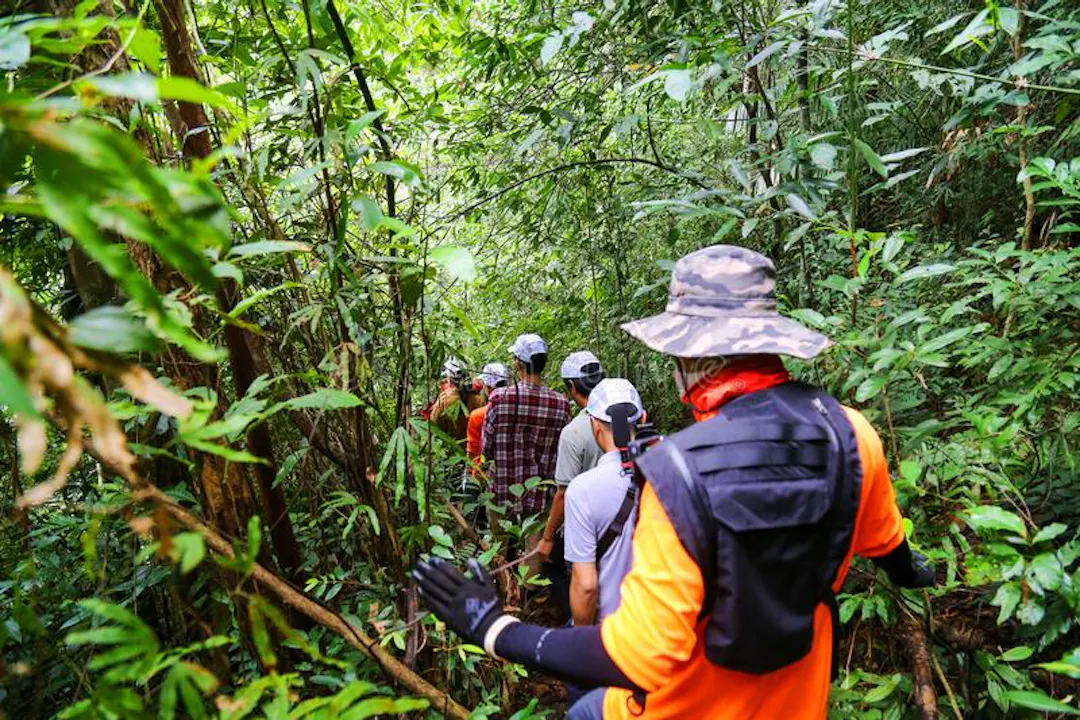
Joining an organized trekking tour can be a practical choice, particularly for remote or technically demanding routes.
A guided tour may include:
- Local trekking guides
- Accommodation or homestays
- Meals
- Transportation
- Camping equipment
- Porter or luggage support
- Emergency assistance
- Route planning
Guides can also provide valuable knowledge about local communities, plants, wildlife, history, and cultural traditions.
For established short hikes, independent travel may be straightforward. For remote mountain and jungle routes, professional local support is often a better option.
When choosing a trekking tour, look for operators that clearly explain the itinerary, difficulty, inclusions, safety procedures, and environmental practices.
Hiking & Trekking Safety in Vietnam
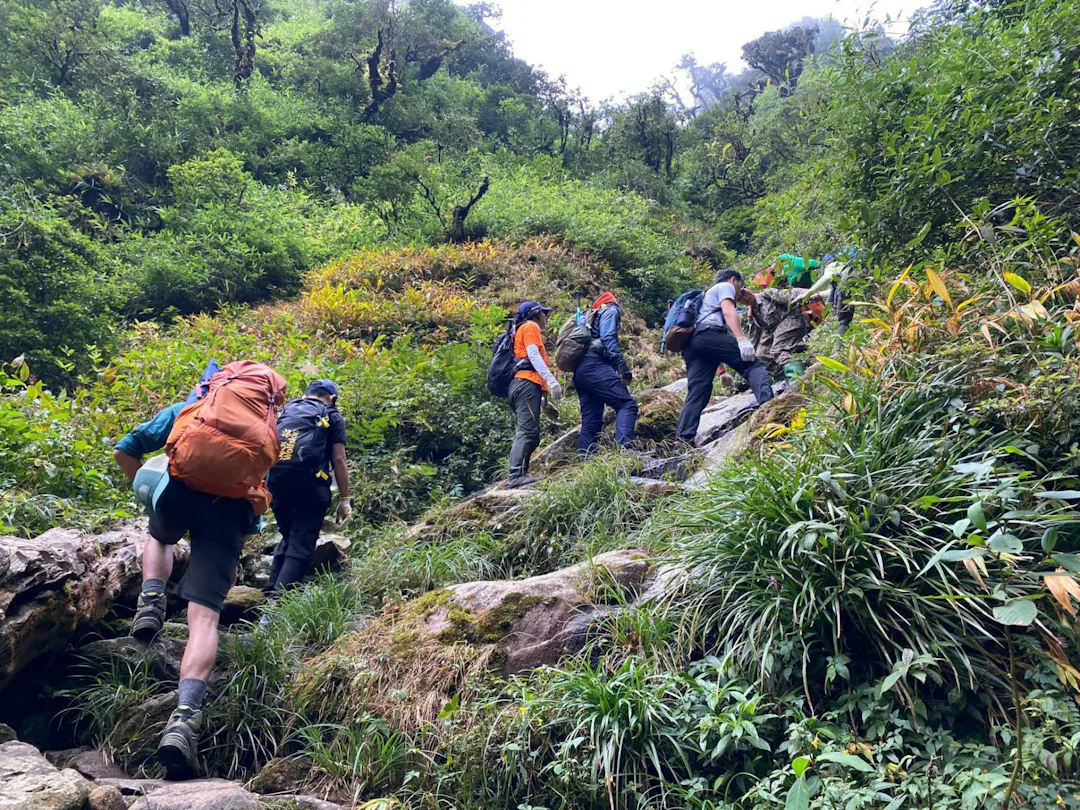
Safety should be a priority on every trekking route.
Check the Weather
Mountain and jungle weather can change quickly. Rain can make trails slippery and can affect streams, rivers, and cave routes.
Check the forecast before departure and be prepared to change your plans when conditions become unsafe.
Carry Enough Water
Heat and humidity can increase fluid loss, particularly on exposed trails. Carry enough water for the planned route and know where reliable refill points are available.
For remote multi-day routes, water purification equipment may be necessary.
Wear Appropriate Footwear
Choose hiking shoes or boots with good traction. Waterproof footwear can be useful in wet mountain and jungle environments, although breathability is also important in Vietnam's humid climate.
Use Offline Maps
Mobile coverage can be unreliable in remote mountain areas. Download maps before leaving and carry a backup navigation method for longer routes.
Consider a Local Guide
A local guide can be especially valuable on remote, poorly marked, or technically challenging routes.
Guides can help with navigation, weather decisions, local logistics, and communication with communities.
Start Early
Starting early can help hikers avoid the strongest midday heat and provide additional daylight in case the route takes longer than expected.
Tell Someone Your Plans
For remote trekking, share your planned route and expected return time with your accommodation, guide, or travel companion.
Respect Trail and Park Regulations
National parks and protected areas may have specific rules concerning camping, fires, wildlife, caves, and access.
Follow local regulations and avoid damaging vegetation or natural formations.
What to Pack for Trekking in Vietnam
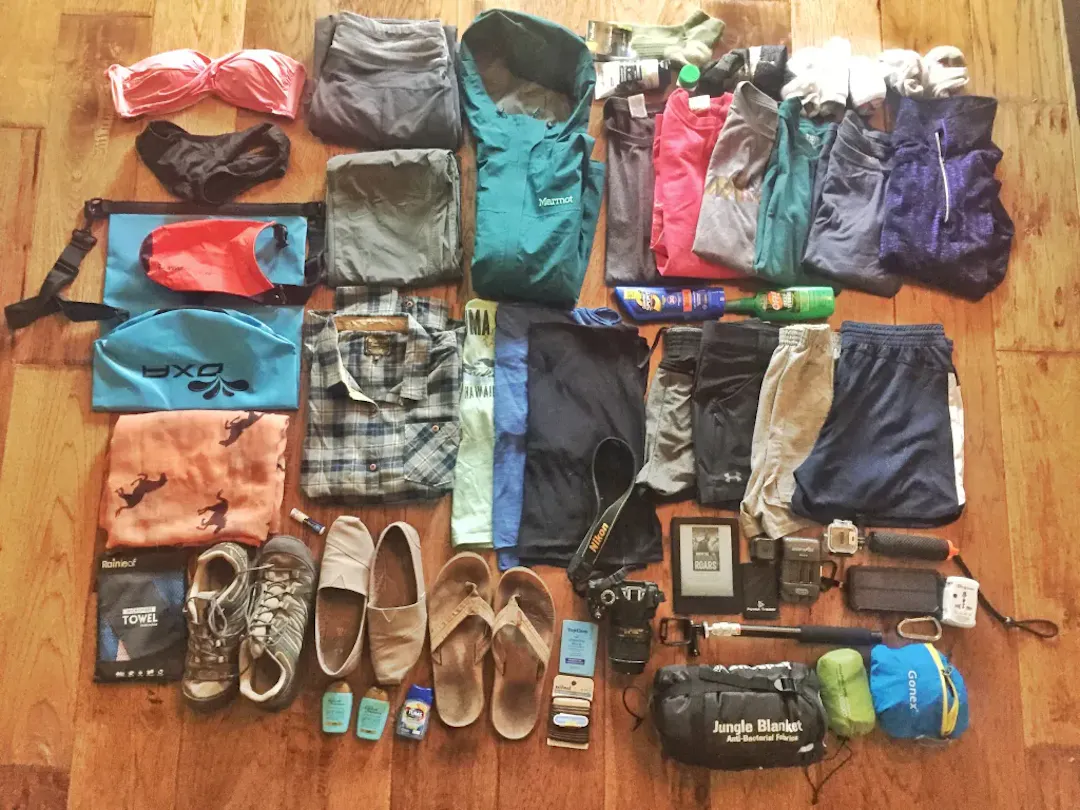
The right equipment depends on the route, season, and duration of your trek.
For a typical day hike, consider bringing:
- Comfortable hiking shoes
- Lightweight clothing
- Rain jacket
- Sun protection
- Hat
- Sunglasses
- Reusable water bottle
- Snacks
- Small first-aid kit
- Phone with offline maps
- Power bank
- Headlamp
For multi-day trekking, additional equipment may include:
- Backpack
- Sleeping bag
- Tent or camping equipment
- Water filter or purification system
- Extra food
- Navigation equipment
- Emergency communication device
- Spare clothing
- Basic repair supplies
Do not carry unnecessary equipment. A lighter backpack can make a significant difference on steep and humid trails.
Hiking & Trekking Etiquette in Vietnam
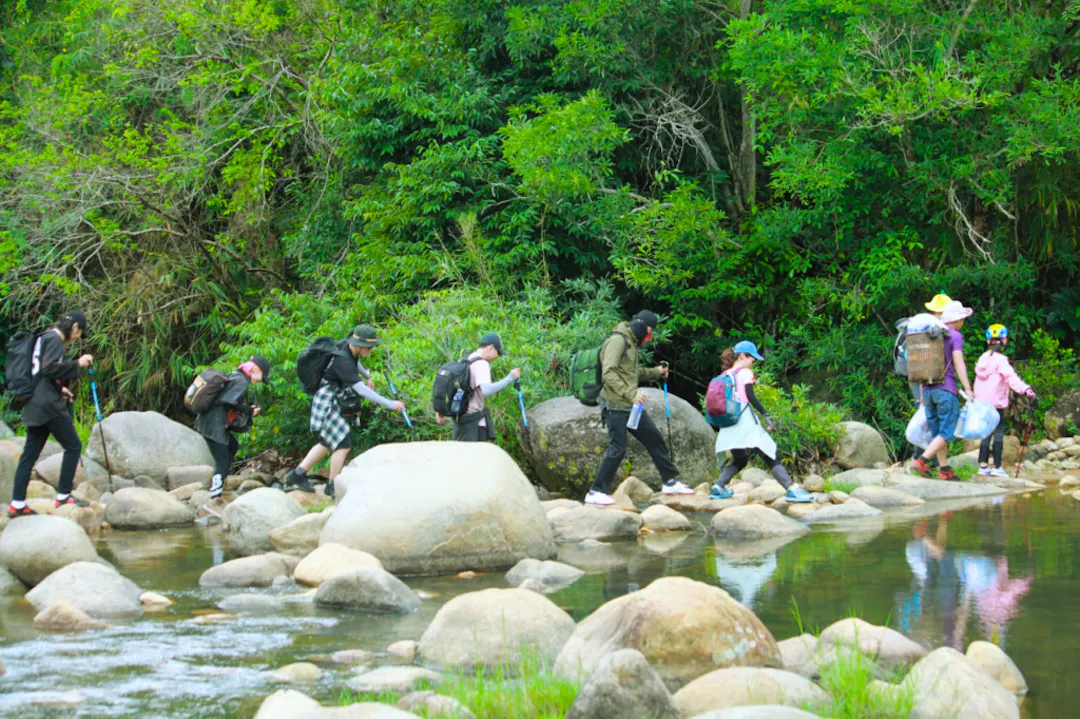
Trekking often takes travelers through villages and communities where traditional lifestyles remain an important part of daily life.
Respect local communities by dressing appropriately, asking permission before taking photographs of people, and avoiding intrusive behavior.
When staying in homestays, follow the host's guidance and respect household customs.
Do not leave rubbish on trails, in forests, caves, or villages. Carry reusable bottles where practical and pack out waste from remote areas.
A simple “Xin chào” is a friendly way to greet people you meet while trekking.
Responsible trekking helps protect both the environment and the communities that make many of Vietnam's hiking destinations special.
How to Choose the Right Trek in Vietnam
The best trekking route is not necessarily the most famous one. It is the route that matches your experience, fitness, available time, and travel interests.
- Choose Sapa or Pu Luong if you want rice terraces, mountain villages, and cultural experiences.
- Choose Cuc Phuong or Cat Ba if you want an accessible national park hiking experience.
- Choose Ninh Binh if you prefer gentle walks through dramatic limestone scenery and rural landscapes.
- Choose Fansipan if you want a serious mountain challenge.
- Choose Ha Giang if you are interested in remote mountain landscapes and ethnic minority communities.
- Choose Phong Nha if jungle and cave adventures are your priority.
- Choose Ta Nang Phan Dung if you are an experienced trekker looking for a demanding multi-day adventure.
Before committing to any route, consider four basic questions:
- How fit am I?
- How many days do I have?
- What weather conditions should I expect?
- Do I need a guide or organized tour?
Answering these questions will help you choose a trek that is challenging without being unnecessarily risky.
Conclusion
Hiking and trekking in Vietnam provide an opportunity to experience landscapes and communities that are difficult to appreciate from the road. From the rice terraces of Sapa and the high summit of Fansipan to the limestone mountains of Ha Giang, the forests of Pu Luong and Cuc Phuong, the caves of Phong Nha, and the remote ridges of Ta Nang Phan Dung, Vietnam offers adventures for a wide range of hiking abilities.
The key is choosing a route that matches your experience, fitness, available time, and preferred landscape. Beginners can start with accessible countryside and national park trails, while experienced trekkers can explore high mountains, remote valleys, jungles, and multi-day wilderness routes.
Check the weather, prepare the right equipment, understand the route difficulty, and use experienced local guides when necessary. With thoughtful planning and responsible travel, trekking in Vietnam can become one of the most memorable ways to discover the country's mountains, forests, villages, and natural landscapes.

By Roy Trinh
Editor
Roy Trinh is a travel writer and destination expert at Go Visit Vietnam, dedicated to helping travelers discover the beauty, culture, and diversity of Vietnam. Through well-researched travel guides, practical itineraries, local insights, and authentic recommendations, Roy shares valuable information to inspire memorable journeys across the country. From vibrant cities and breathtaking landscapes to regional cuisine and cultural heritage, every guide is created to help visitors experience Vietnam with confidence and curiosity.
Frequently Asked Questions - Hiking & Trekking in Vietnam
Is Vietnam good for hiking and trekking?
Yes. Vietnam offers a wide variety of hiking and trekking experiences, including rice terrace walks, mountain routes, rainforest trails, coastal hikes, and multi-day wilderness adventures.
What are the best hikes in Vietnam?
Popular hiking destinations include Sapa, Fansipan, Ha Giang, Pu Luong, Phong Nha, Ba Be, Cuc Phuong, Cat Ba, and Ta Nang Phan Dung.
Is trekking in Vietnam suitable for beginners?
Yes. Beginners can start with easier routes in places such as Ninh Binh, Cuc Phuong, Cat Ba, Pu Luong, and selected Sapa trails.
What is the hardest trek in Vietnam?
The difficulty depends on the route and conditions, but Fansipan, Ta Nang Phan Dung, remote Ha Giang routes, and certain Phong Nha jungle and cave expeditions can be demanding for experienced trekkers.
Do I need a guide for trekking in Vietnam?
Not necessarily for short, established trails. However, a local guide is strongly recommended for remote mountain routes, multi-day wilderness treks, and certain jungle or cave expeditions.
What is the best time for trekking in Vietnam?
The best time varies by region. Northern mountain destinations generally have more comfortable trekking conditions during cooler and drier periods, while central and southern destinations follow different seasonal patterns.
Can I trek Fansipan without a guide?
Fansipan is a demanding mountain route, and travelers should carefully consider current trail conditions, regulations, weather, and their experience before attempting it. A professional local guide can provide navigation and safety support.
How long should I spend trekking in Vietnam?
You can enjoy a half-day or one-day hike, a two- or three-day trek, or a longer multi-day expedition. The ideal duration depends on your destination and experience.
What should I bring for trekking in Vietnam?
Essential items include suitable hiking footwear, water, sun and rain protection, snacks, a first-aid kit, offline maps, and a power bank. Longer treks require additional equipment for food, water purification, navigation, and camping.
Advertising box
Explore Outdoor Adventures in Vietnam
Experience Vietnam's most exciting outdoor activities, from mountain trekking and jungle hiking to cave exploration, kayaking, cycling, waterfall adventures, island escapes, and national park discoveries. Find inspiring guides to help you explore Vietnam's spectacular landscapes and unforgettable nature experiences.
Cycling in Vietnam: Best Routes, Bike Tours & Travel Guide
Discover cycling in Vietnam through scenic mountain roads, peaceful countryside lanes, coastal routes, and vibrant river landscapes. From the challenging Ha Giang Loop and Hai Van Pass to the relaxed countryside of Ninh Binh, Hoi An, and the Mekong Delta, Vietnam offers cycling experiences for different fitness levels and travel styles. Explore the best cycling routes, recommended seasons, itineraries, bike tours, essential gear, safety advice, and practical tips for planning an unforgettable cycling adventure across Vietnam.
Mountain Hiking in Vietnam: Best Peaks, Trails & Hiking Guide
Journey to the rugged northern frontier of Vietnam and conquer Southeast Asia's most majestic alpine peaks. This definitive high-altitude guide explores legendary summit trails across the Hoang Lien Son range, including Mount Fansipan, Ngu Chi Son, Ky Quan San, Lao Than, and the remote border wilderness of Pu Si Lung. Discover expert insights on vertical elevation profiles, technical scramble grades, seasonal weather windows, high-altitude gear requirements, and essential acclimatization protocols for an extraordinary mountain expedition.
Jungle Trekking in Vietnam: Best Rainforest Treks & National Parks
Step beneath ancient tropical canopies and discover the untouched wilderness of Southeast Asia with this ultimate rainforest expedition guide. From the vast subterranean cave networks and limestone karst valleys of Phong Nha-Kẻ Bàng to the thousand-year-old botanical archives of Cúc Phương, misty cloud forests of Bạch Mã, and coastal island reserves of Cát Bà, explore Vietnam’s premier national parks. Learn essential gear recommendations, survival strategies, microclimate navigation, and eco-conservation protocols for an unforgettable deep-jungle adventure.
Easy Hikes in Vietnam for Beginners: Top Scenic & Family Trails
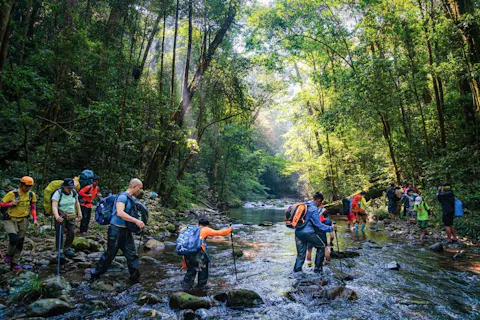
Exploring Vietnam’s stunning natural landscapes doesn't require technical climbing skills or grueling multi-day survival treks. This soft adventure travel guide highlights the country’s most accessible, beginner-friendly trails designed for novice walkers, active families, and leisure travelers. Discover gentle valley walks in Sapa and Mai Chau, pine-scented highland paths in Da Lat, coastal island boardwalks in Cat Ba, and misty cloud-forest loops in Bach Ma National Park, all offering breathtaking scenery with minimal physical strain.
Best Trekking Routes in Vietnam: Top Multi-Day Treks & Adventures
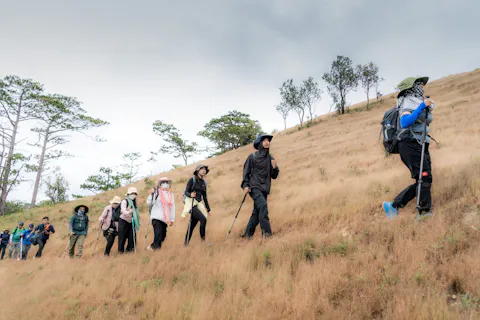
Embark on an epic journey across Southeast Asia's most dramatic landscapes with this comprehensive guide to multi-day trekking in Vietnam. From the misty terraced valleys of Sapa and the steep granite peak of Mount Fansipan to the rugged karst pinnacles of Ha Giang, primeval jungle caverns of Phong Nha, and sweeping pine ridgelines of Ta Nang-Phan Dung, discover top wilderness itineraries, essential gear requirements, seasonal timing, and expert guidance for an unforgettable outdoor expedition.
Best Hiking Trails in Vietnam: The Ultimate Wilderness Trekking Guide
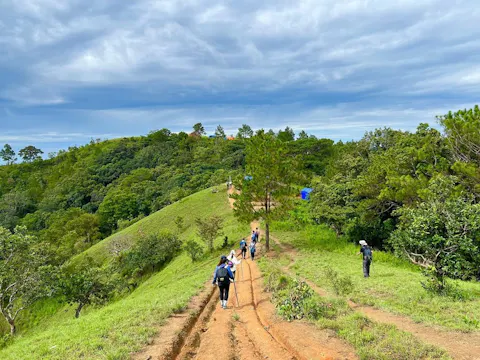
From misty mountain valleys to deep subterranean caves, Vietnam offers some of Southeast Asia's most spectacular trekking routes. This definitive wilderness guide explores the best hiking trails across the nation, including the terraced paths of Sapa, the steep vertical ascent of Mount Fansipan, the primeval jungle caves of Phong Nha, the rugged karst limestone peaks of Ha Giang, and the sweeping ridgelines of Ta Nang Phan Dung. Discover essential expedition logistics, seasonal insights, and cultural etiquette for your next mountain adventure.