
What Is Bun Cha? Hanoi's Grilled Pork & Noodles Explained
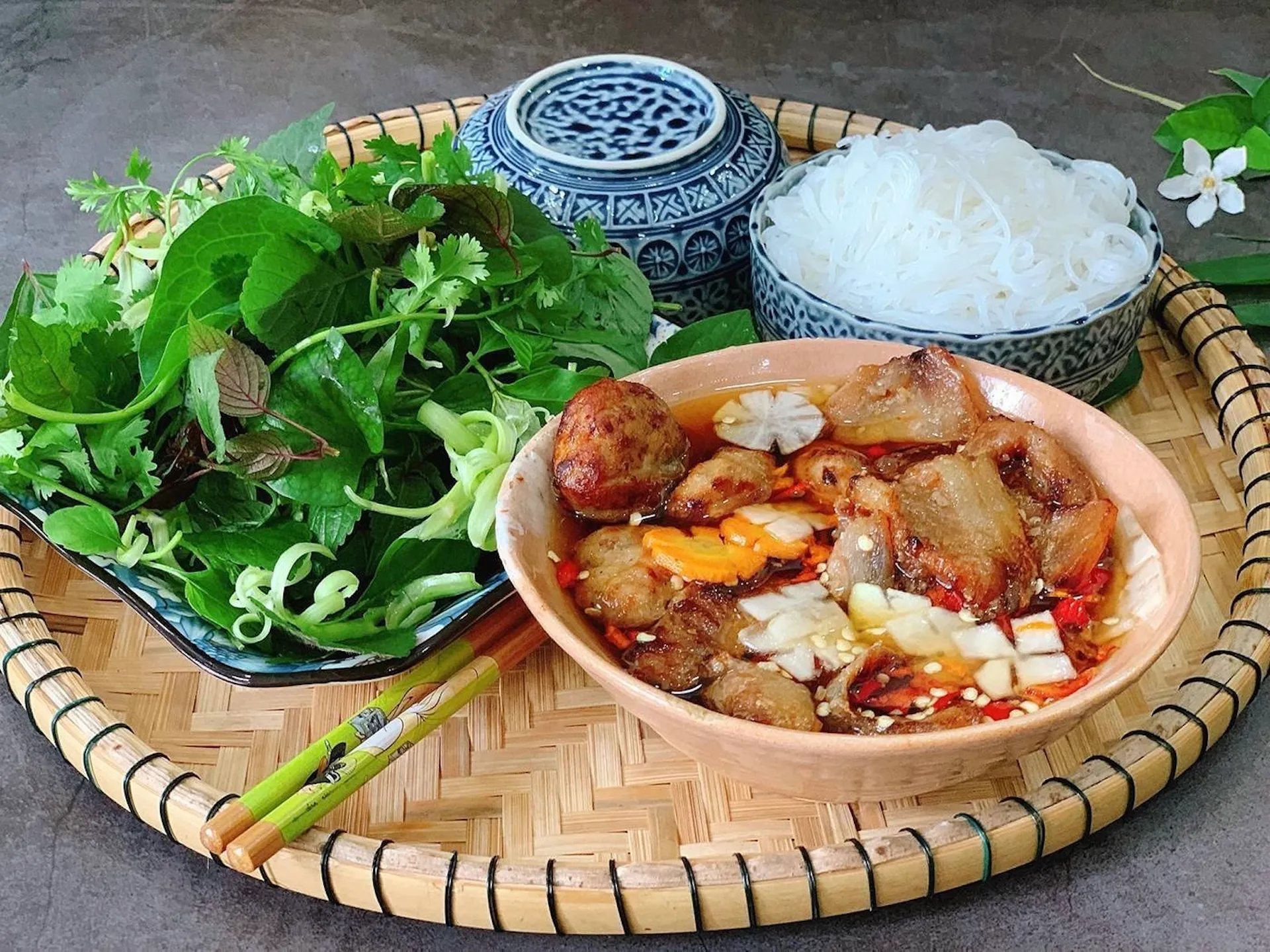
Bún Chả is one of Hanoi's most famous dishes, combining smoky charcoal-grilled pork, soft rice vermicelli, fresh herbs, pickled vegetables, and a warm sweet-and-savory fish sauce broth. Unlike many Vietnamese noodle dishes, the ingredients are served separately so diners can combine them with each bite. Discover what Bun Cha is, what it tastes like, how it is prepared, the ingredients traditionally used, how to eat it like a local, and how Hanoi's classic dish differs from Bun Thit Nuong in southern Vietnam.
On this page
- What Is Bun Cha?
- What Is Bun Cha Made Of?
- What Does Bun Cha Taste Like?
- How Is Bun Cha Cooked?
- Why Is Charcoal Important to Bun Cha?
- How to Eat Bun Cha Like a Local
- Why Is Bun Cha Famous in Hanoi?
- Bun Cha vs. Bun Thit Nuong: What's the Difference?
- Is Bun Cha a Northern Vietnamese Dish?
- When Do Vietnamese People Eat Bun Cha?
- Bun Cha and Hanoi's Street Food Culture
- Is Bun Cha Healthy?
- Where to Try Bun Cha in Vietnam
- Bun Cha and Vietnam's Global Food Culture
- Final Thoughts
Bún Chả is one of Hanoi's most iconic dishes, made with charcoal-grilled pork, rice vermicelli noodles, fresh herbs, pickled vegetables, and a warm sweet-and-savory fish sauce dipping broth. Unlike many Vietnamese noodle dishes, the ingredients are usually served separately, allowing diners to combine noodles, pork, herbs, and pickles with the flavorful broth in every bite.
Closely associated with Hanoi food and Vietnamese street food, Bun Cha is a must-try dish for travelers exploring Vietnam's capital. Its combination of smoky pork, cool noodles, aromatic herbs, and tangy-sweet dipping sauce creates a distinctive balance of flavors and textures.
What Is Bun Cha?
Bún Chả is a traditional Hanoi dish featuring grilled pork served with rice vermicelli, fresh herbs, pickled vegetables, and a warm fish sauce-based dipping broth.
The name describes its main components:
- Bún – Vietnamese rice vermicelli
- Chả – grilled seasoned pork
The pork usually comes in two forms: small grilled pork patties called chả viên and slices of grilled pork belly or shoulder. The meat is cooked over charcoal, giving it a smoky aroma and lightly charred edges. It is then served in a bowl of warm, sweet-and-savory dipping broth with pieces of pickled green papaya and carrot.
The noodles, herbs, and vegetables are generally served separately. This arrangement is an important part of the Bun Cha experience. Instead of mixing everything into one bowl, diners dip or combine small portions as they eat.
What Is Bun Cha Made Of?
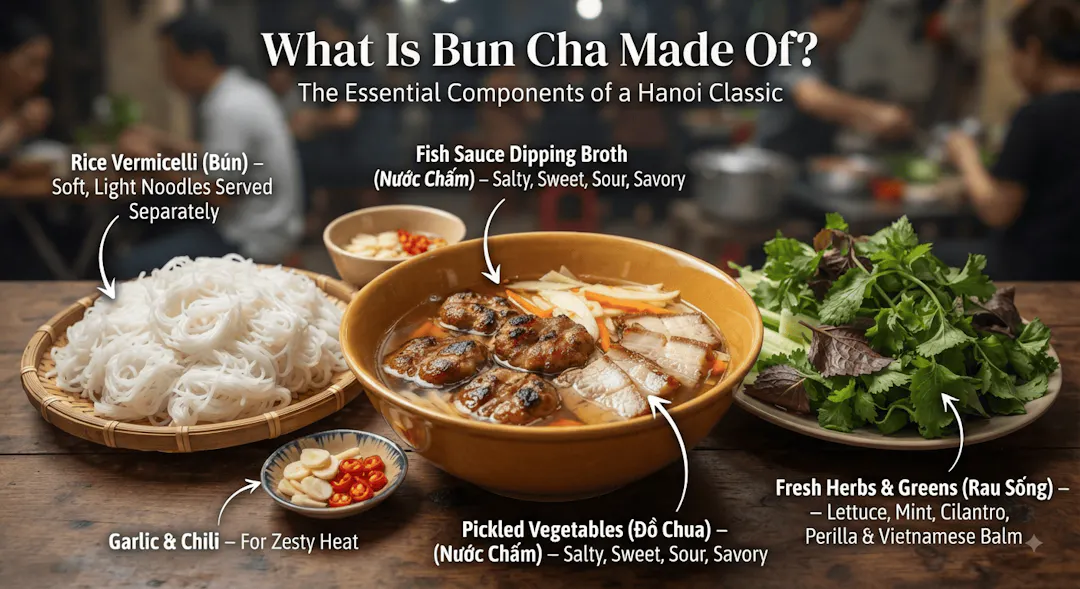
A traditional serving of Bun Cha contains several simple components that work together to create its distinctive flavor.
Grilled Pork
The centerpiece of Bun Cha is its charcoal-grilled pork. There are usually two main preparations:
- Chả viên consists of seasoned ground pork shaped into small patties. The pork is typically mixed with aromatics such as garlic, shallots, fish sauce, sugar, and black pepper before being grilled.
- Chả miếng consists of sliced pork, often pork belly or another moderately fatty cut. The fat helps keep the meat juicy while creating flavorful charred edges over the grill.
The pork is grilled fresh, often directly over charcoal, which gives Bun Cha its characteristic smoky aroma.
Rice Vermicelli
The bún in Bun Cha is thin Vietnamese rice vermicelli.
Unlike some noodle dishes where noodles are mixed directly with sauce, Bun Cha traditionally serves the noodles separately from the grilled pork and dipping broth.
The noodles are soft, light, and relatively neutral in flavor, making them ideal for absorbing the savory broth and balancing the richness of the pork.
Fish Sauce Dipping Broth
The dipping broth, commonly called nước chấm, is essential to Bun Cha.
It is generally made with:
- Fish sauce
- Water
- Sugar
- Vinegar or another acidic ingredient
- Garlic
- Chili
The result is a light sauce with a balance of salty, sweet, sour, and savory flavors.
Unlike a thick sauce, Bun Cha's dipping liquid is relatively thin and warm. The grilled pork is placed directly into the broth, allowing it to absorb the seasoning while remaining juicy.
Pickled Vegetables
Small pieces of green papaya and carrot are commonly added to the dipping broth.
These pickled vegetables provide:
- Crunch
- Acidity
- Mild sweetness
- Freshness
Their sharp, refreshing character helps balance the fatty grilled pork.
Fresh Herbs and Vegetables
Bun Cha is typically accompanied by a generous plate of fresh herbs and greens.
Depending on the restaurant, you may find:
- Lettuce
- Mint
- Cilantro
- Perilla
- Vietnamese balm
- Other local herbs
These fresh ingredients provide aromatic and slightly bitter notes that contrast with the smoky meat and sweet-savory dipping sauce.
What Does Bun Cha Taste Like?
Bun Cha tastes smoky, savory, slightly sweet, tangy, and herbaceous. The grilled pork provides the strongest flavor. Charcoal gives the meat a distinctive smoky aroma, while caramelized edges add a subtle sweetness.
The dipping broth adds another layer of flavor with its combination of fish sauce, sugar, acidity, garlic, and chili. Fresh herbs provide a lighter, aromatic contrast, while pickled vegetables add crunch and acidity.
The result is a meal built around contrasting flavors and textures:
smoky pork + warm broth + soft noodles + crisp pickles + fresh herbs.
This balance is one reason Bun Cha has become one of Hanoi's most recognizable dishes.
How Is Bun Cha Cooked?
Traditional Bun Cha gets much of its flavor from charcoal grilling. The pork is seasoned before being placed over a hot charcoal grill. As the meat cooks, its fat renders and drips onto the coals, producing smoke that gives the pork its characteristic grilled aroma.
The outside becomes lightly charred while the interior remains tender and juicy. The patties and pork slices are usually grilled in small batches, allowing vendors to serve the meat hot and fresh.
This direct charcoal cooking is one of the most important differences between traditional Bun Cha and versions prepared using modern indoor grills.
Why Is Charcoal Important to Bun Cha?
Charcoal does more than simply cook the pork.
The high heat creates browned, caramelized surfaces while the smoke adds another layer of aroma.
The combination of:
- High heat
- Rendered pork fat
- Charcoal smoke
- Caramelized marinade
creates the distinctive flavor associated with Hanoi-style Bun Cha.
For many diners, the smell of pork grilling over charcoal is one of the most recognizable parts of eating Bun Cha in Hanoi.
How to Eat Bun Cha Like a Local
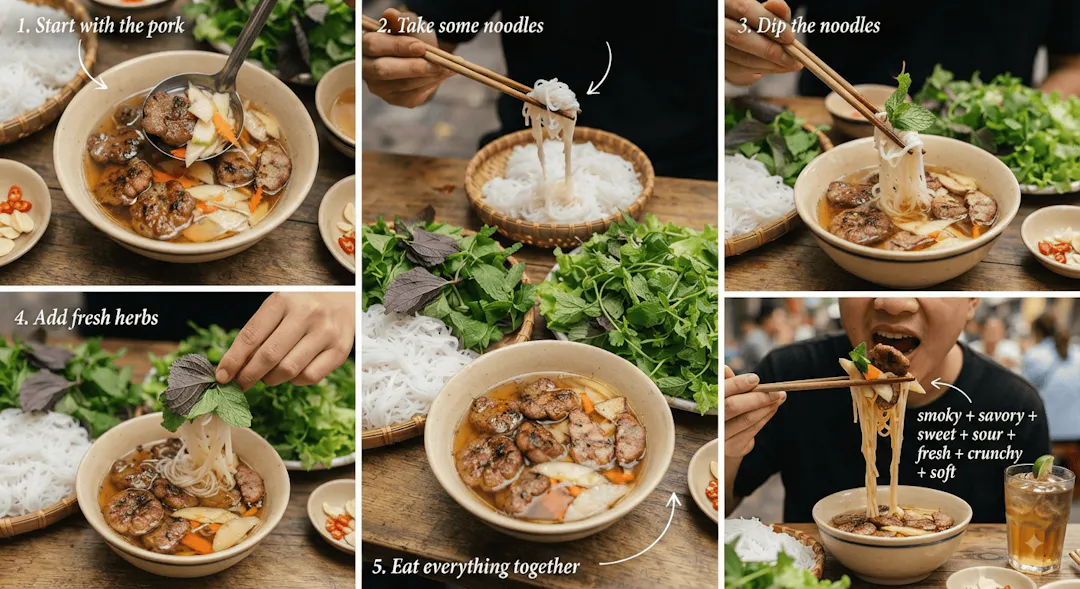
Bun Cha may look slightly complicated when it first arrives because the noodles, pork, broth, and herbs are usually served separately.
But eating it is simple.
1. Start with the pork
The grilled pork is normally placed inside the bowl of warm dipping broth along with the pickled vegetables.
2. Take some noodles
Use chopsticks to pick up a small portion of rice vermicelli.
3. Dip the noodles
Place the noodles into the warm broth with the grilled pork.
4. Add fresh herbs
Add a few herbs or leafy greens to the bite.
5. Eat everything together
Combine a little noodle, pork, pickle, broth, and herb in each bite.
This gives you the full contrast of:
smoky + savory + sweet + sour + fresh + crunchy + soft.
You can adjust the amount of herbs, chili, and noodles according to your preference.
Why Is Bun Cha Famous in Hanoi?
Bun Cha is strongly associated with Hanoi, where it has long been part of the city's everyday food culture. It is particularly associated with lunchtime. Across Hanoi, small restaurants and street-side eateries serve grilled pork over charcoal while customers sit on small stools around simple tables.
The dish fits naturally into Hanoi's street-food culture because the pork can be grilled quickly and served with inexpensive noodles, herbs, and vegetables. Its popularity also comes from its balance. The meal feels substantial because of the pork but remains relatively light because of the noodles, herbs, and pickled vegetables.
For travelers, Bun Cha offers an excellent introduction to the flavors of northern Vietnamese cuisine.
Bun Cha vs. Bun Thit Nuong: What's the Difference?
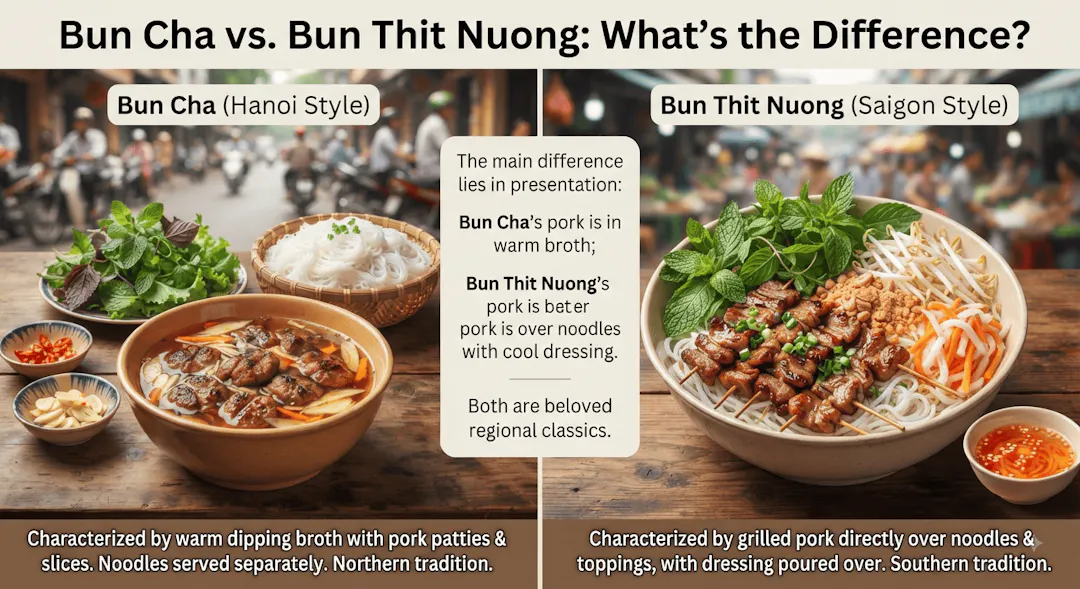
Bun Cha and Bun Thit Nuong are both Vietnamese grilled pork and rice noodle dishes, but they are prepared and served differently.
Bun Cha
Typically associated with Hanoi and northern Vietnam:
- Charcoal-grilled pork patties and pork slices
- Warm fish sauce-based dipping broth
- Rice vermicelli served separately
- Pickled vegetables
- Fresh herbs
Bun Thit Nuong
More commonly associated with southern and central Vietnam:
- Grilled pork
- Rice vermicelli
- Fresh herbs and vegetables
- Fish sauce dressing
- Often scallion oil
- Frequently peanuts and other toppings
The biggest difference is the presentation.
With Bun Cha, the grilled pork sits in a bowl of warm dipping broth while the noodles are served separately.
With Bun Thit Nuong, the grilled pork is generally placed directly over the noodles and toppings, with the dressing poured over or served alongside.
Both are excellent Vietnamese dishes, but they represent different regional food traditions.
Is Bun Cha a Northern Vietnamese Dish?
Yes. Bun Cha is most strongly associated with Hanoi and northern Vietnamese cuisine. While it is now available throughout Vietnam, Hanoi remains the dish's cultural home.
Its flavor profile also reflects characteristics commonly associated with northern Vietnamese cooking: balanced seasoning, fresh herbs, fermented fish sauce, and an emphasis on the natural flavor of grilled meat rather than very heavy sauces.
That does not mean every northern dish follows the same flavor profile, but Bun Cha remains one of the clearest examples of Hanoi's distinctive food culture.
When Do Vietnamese People Eat Bun Cha?
Bun Cha is particularly popular as a lunch dish in Hanoi. Many traditional Bun Cha restaurants become busy around midday, when locals stop for a quick but satisfying meal. The combination of grilled pork, noodles, vegetables, and herbs makes it filling without relying on a large portion of rice.
Today, however, Bun Cha can be enjoyed at different times of day, especially at restaurants serving it to visitors and local diners.
Bun Cha and Hanoi's Street Food Culture
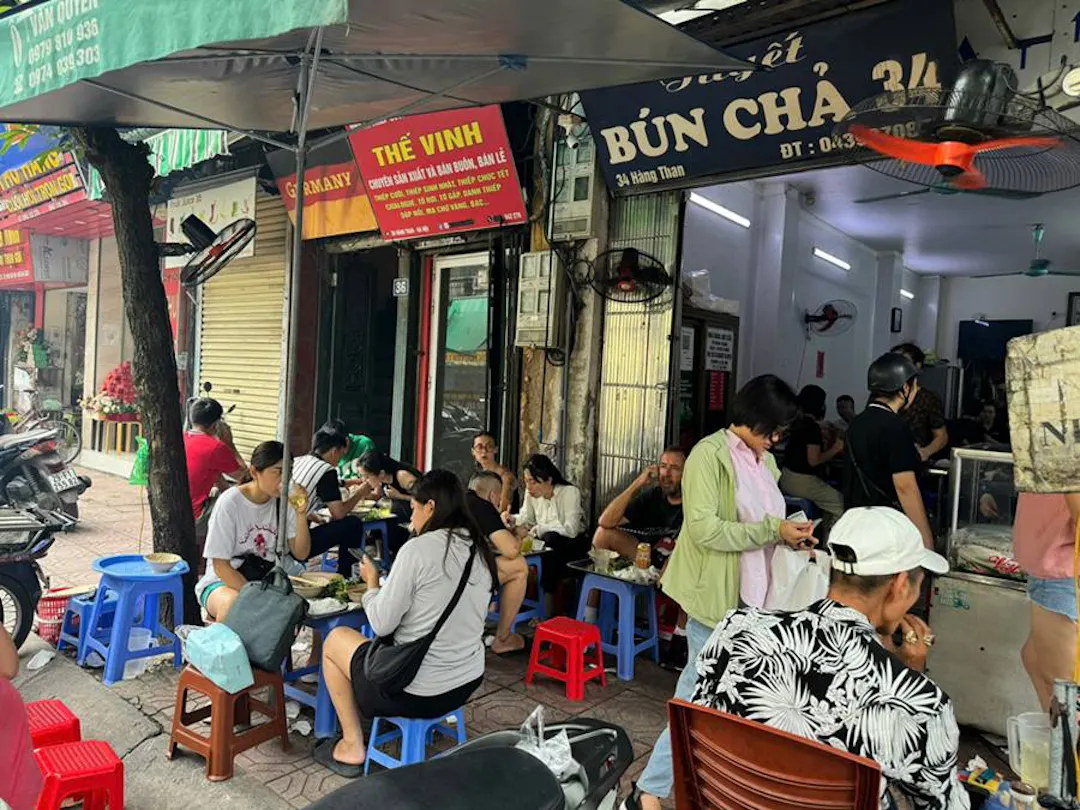
Bun Cha is more than a combination of pork and noodles. It represents the atmosphere of Hanoi's everyday street food.
A traditional meal might involve:
- A small charcoal grill beside the sidewalk
- Pork sizzling over hot coals
- A bowl of warm dipping broth
- A plate of white rice vermicelli
- Fresh herbs piled onto a communal plate
- Diners sitting on low stools
The simplicity of the setting contrasts with the complexity of the flavors.
This is part of what makes Bun Cha such an important experience for travelers interested in Hanoi food.
Is Bun Cha Healthy?
Bun Cha can provide a combination of protein, carbohydrates, vegetables, and herbs, but its nutritional profile depends on the ingredients and portion size. The grilled pork provides protein and fat, while rice vermicelli supplies carbohydrates. Fresh herbs and pickled vegetables contribute additional micronutrients and fiber.
However, the pork and fish sauce-based dipping broth can also contain considerable amounts of fat and sodium. Rather than labeling Bun Cha simply as healthy or unhealthy, it is better understood as a balanced meal containing several different food groups.
For travelers, enjoying Bun Cha as part of a varied Vietnamese diet is a reasonable approach.
Where to Try Bun Cha in Vietnam
Although Bun Cha can now be found across Vietnam, Hanoi is the best place to experience its traditional style.
Look for local restaurants where:
- Pork is grilled over charcoal
- Meat is cooked close to serving time
- Rice vermicelli is served separately
- Fresh herbs accompany the meal
- Pickled vegetables are included in the dipping broth
In Hanoi's Old Quarter and surrounding neighborhoods, Bun Cha restaurants range from small family-run eateries to more modern restaurants. For the most traditional experience, choose a busy local restaurant where you can see or smell the pork being grilled nearby.
Bun Cha and Vietnam's Global Food Culture
Bun Cha has become increasingly recognized outside Vietnam. Its international reputation grew as travelers, chefs, food writers, and international media began highlighting Hanoi's street-food culture.
The dish became particularly well known internationally after former U.S. President Barack Obama was famously photographed eating Bun Cha with chef Anthony Bourdain during a visit to Hanoi in 2016.
That moment introduced the dish to an even wider international audience. However, Bun Cha was already an important part of Hanoi's culinary identity long before it became internationally famous.
Final Thoughts
Bun Cha is one of the best dishes to try when exploring Hanoi's food culture. Its appeal comes from a simple but carefully balanced combination: smoky charcoal-grilled pork, soft rice vermicelli, warm fish sauce broth, crisp pickled vegetables, and fragrant Vietnamese herbs.
Unlike a typical noodle soup, Bun Cha lets you build each bite yourself. You can combine the noodles, pork, broth, and herbs in different proportions, creating a meal that is both interactive and deeply satisfying.
If you are visiting Hanoi, trying an authentic bowl of Bún Chả is an essential Vietnamese food experience. And if you later travel to southern Vietnam, comparing it with Bún Thịt Nướng offers an interesting way to discover how the same core ingredients can produce distinctly different regional dishes.
Read more: Bún Chả: Hanoi's Grilled Pork Noodle Dish

By Roy Trinh
Editor
Roy Trinh is a travel writer and destination expert at Go Visit Vietnam, dedicated to helping travelers discover the beauty, culture, and diversity of Vietnam. Through well-researched travel guides, practical itineraries, local insights, and authentic recommendations, Roy shares valuable information to inspire memorable journeys across the country. From vibrant cities and breathtaking landscapes to regional cuisine and cultural heritage, every guide is created to help visitors experience Vietnam with confidence and curiosity.
Frequently Asked Questions About Bun Cha
What is Bun Cha?
Bun Cha is a traditional Hanoi dish made with charcoal-grilled pork, rice vermicelli noodles, fresh herbs, pickled vegetables, and a warm sweet-and-savory fish sauce dipping broth.
What is Bun Cha made of?
The main ingredients are grilled pork, rice vermicelli, fish sauce-based dipping broth, pickled vegetables, and fresh herbs.
What does Bun Cha taste like?
Bun Cha has a smoky, savory, slightly sweet and tangy flavor. Fresh herbs and pickled vegetables add freshness and acidity.
Is Bun Cha from Hanoi?
Yes. Bun Cha is strongly associated with Hanoi and is one of the capital's most famous traditional dishes.
How do you eat Bun Cha?
Dip small portions of rice vermicelli into the warm broth with grilled pork, pickled vegetables, and fresh herbs. Combine them together for each bite.
Is Bun Cha spicy?
Bun Cha is not necessarily spicy. Chili is commonly added to the dipping broth according to individual preference.
What meat is used in Bun Cha?
Bun Cha commonly uses ground pork patties and slices of pork belly or another fatty pork cut.
What noodles are used in Bun Cha?
Bun Cha uses thin Vietnamese rice vermicelli called bún.
What is the difference between Bun Cha and Bun Thit Nuong?
Bun Cha is associated with Hanoi and is served with grilled pork in a warm dipping broth. Bun Thit Nuong is more common in southern Vietnam and usually serves grilled pork directly over rice vermicelli with herbs, vegetables, and fish sauce dressing.
Is Bun Cha healthy?
Bun Cha provides protein, carbohydrates, herbs, and vegetables, but the pork and fish sauce can also contribute significant fat and sodium. Its nutritional value depends on the ingredients and portion size.
Advertising box
Related Bun Cha Articles
Discover more about Bun Cha, one of Vietnam's most beloved dishes and a classic specialty of Hanoi. Explore our collection of guides covering the history and origins of Bun Cha, traditional ingredients, how it is prepared and served, its distinctive flavors, and the best places to try it in Vietnam. Whether you're learning about Vietnamese cuisine or planning your first food adventure in Hanoi, these articles will help you understand and enjoy Bun Cha like a local.
Obama Pho or Bun Cha? The Story Behind Obama's Famous Meal in Hanoi
When former U.S. President Barack Obama visited Hanoi in 2016, one simple meal captured the world's attention. Many people mistakenly believe he ate Pho, but it was actually Bun Cha that he enjoyed alongside chef Anthony Bourdain. The memorable dinner introduced millions to one of Vietnam's most beloved dishes and became an iconic moment in culinary history. This article explores the story behind Obama's famous meal and why Bun Cha remains a must-try experience in Hanoi.

Where to Eat the Best Bun Cha in Hanoi (Top Authentic & Local Spots)
Hanoi is the birthplace of Bun Cha, and nowhere else serves this iconic dish quite the same way. From legendary family-run restaurants to hidden neighborhood eateries and famous spots visited by world leaders, the capital offers countless opportunities to enjoy authentic Bun Cha. This guide introduces the best places to eat Bun Cha in Hanoi, highlighting local favorites, signature flavors, and practical tips to help you experience one of Vietnam's most beloved culinary traditions like a true local.
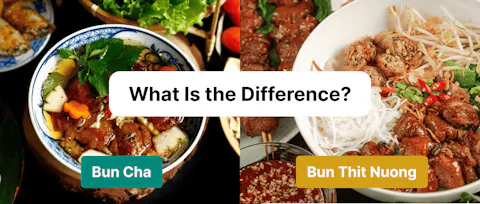
Bun Cha vs Bun Thit Nuong: What Is the Difference?
At first glance, Bun Cha and Bun Thit Nuong may look similar because both feature grilled pork and rice noodles. However, these two beloved Vietnamese dishes differ significantly in their origins, serving style, dipping sauce, and overall dining experience. Bun Cha is a signature specialty of Hanoi served with warm broth, while Bun Thit Nuong is popular in southern Vietnam as a dry noodle dish. This guide explains the key differences and helps you choose which one to try first.