
5 Incredible Varieties of Hu Tieu You Must Try
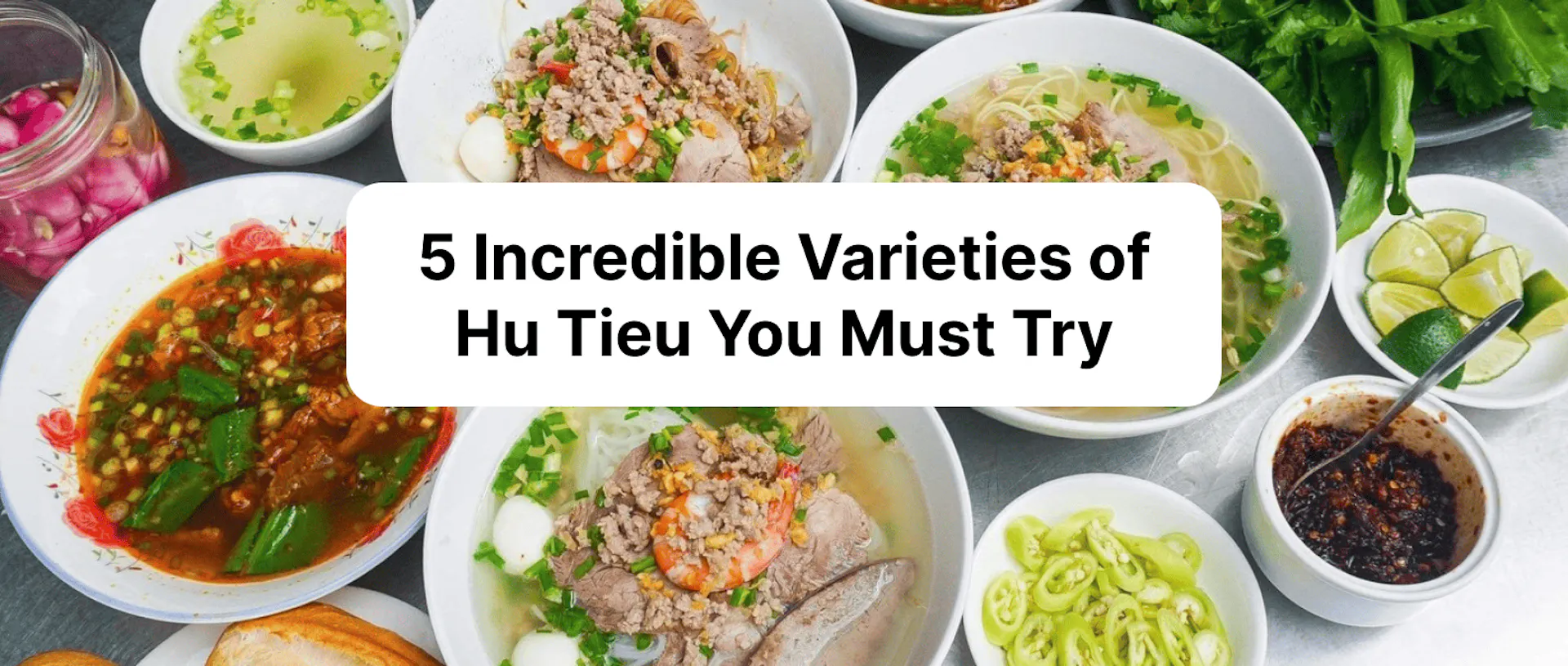
Far from being a uniform street food, Southern Vietnam’s iconic noodle soup changes its character across every provincial border. This master gastronomic guide explores five incredible regional expressions of Hu Tieu—from the sun-dried, snappy noodles of My Tho and the soft tapioca strands of Sa Dec to the cross-border richness of Nam Vang, coastal Go Cong, and Saigon’s addictive dry-tossed style. Embark on a delicious journey through regional starches, heritage bone broths, and unique culinary identities.
On this page
To travel through the fertile, waterlogged expanse of the Mekong Delta and into the kinetic urban centers of Southern Vietnam is to enter a land defined by an incredible, multi-layered noodle culture. While northern culinary traditions are internationally celebrated through the subtle, aromatic clarity of beef pho, the south boasts an altogether different, highly complex gastronomic icon: hủ tiếu. For the uninitiated food traveler, this dish is often viewed as a singular, uniform street food item. However, an empirical study of regional foodways reveals that the vast universe of varieties of Hu Tieu represents a dynamic tapestry of geographical adaptation, starch chemistry, and cross-border migration. Far from being a monolithic noodle soup, the dish alters its fundamental character every time you cross a provincial boundary, reflecting local agricultural processing techniques, coastal seafood access, and heritage recipes passed down through generational kitchens. Navigating these types of Hu Tieu Vietnam offers an unparalleled window into the cultural soul of the region, making a comparative tasting of these five must try Hu Tieu regional expressions an essential journey for any serious food ethnographer exploring Non nước Việt Nam.
The Iconic Benchmark – Hu Tieu My Tho
The Chemistry of Sun-Dried Rice Noodles and Clear Broth
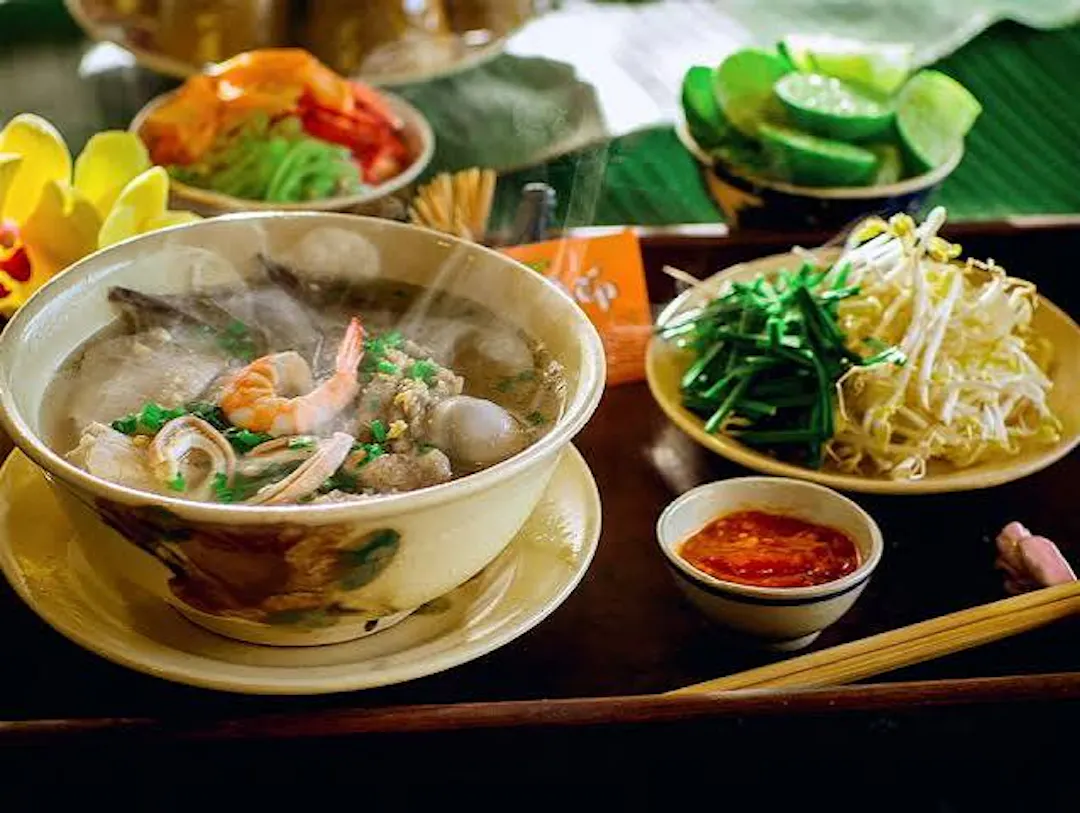
Standing as the undisputed architectural benchmark among the best Hu Tieu varieties across the Mekong Delta, hủ tiếu Mỹ Tho represents a masterclass in regional starch processing and textural engineering. Originating from the historic riverine trading city of My Tho in Tien Giang province, this specific regional style is globally renowned for its distinct, translucent rice noodles (bánh dai). Unlike soft, thick rice strands that absorb broth rapidly and swell into a mushy consistency, the noodle artisans of My Tho utilize high-starch local rice varieties, grinding the grain into a dense slurry before steaming and extruding fine ribbons. These strands are systematically laid out on woven bamboo mats and sun-dried under the intense tropical climate of miền Tây. This sun-drying process triggers precise starch gelatinization, creating an elastic, chewy strand that retains a remarkably resilient, al dente snap even when submerged in piping-hot broth. This structural integrity guarantees that every single bite yields an unmistakable springy resistance, establishing the defining physical baseline for different types of Hu Tieu in Vietnam.
The Bone-Pork Reduction and Dried Squid Umami
Complementing these exceptional sun-dried noodles is a crystal-clear, intensely aromatic broth that serves as the gold standard for best Hu Tieu in Southern Vietnam. The stock preparation in My Tho is a slow, methodical science. Master broth-makers simmer massive quantities of marrow-rich pork leg bones, pork necks, and cracked knuckles for eight to twelve hours over low, steady heat, constantly skimming impurities to preserve absolute optical clarity. The critical regional signature, however, comes from the strategic addition of toasted sun-dried squid (mực khô) and small dried shrimp harvested directly from nearby coastal estuaries. As these dried marine elements break down alongside charred shallots, daikon radish, and yellow rock sugar, they infuse the pork reduction with an ocean-born, umami-rich sweetness that perfectly balances the savory richness of the animal fats. Served garnished with thinly sliced poached pork loin, minced pork, boiled tiger prawns, crisp bean sprouts, and fragrant Chinese celery, hủ tiếu Mỹ Tho delivers a bright, harmonious flavor profile that anchors the entire delta noodle taxonomy.
The Starchy Pride of the Province – Hu Tieu Sa Dec
The Tapioca Infusion and Soft Noodle Tradition
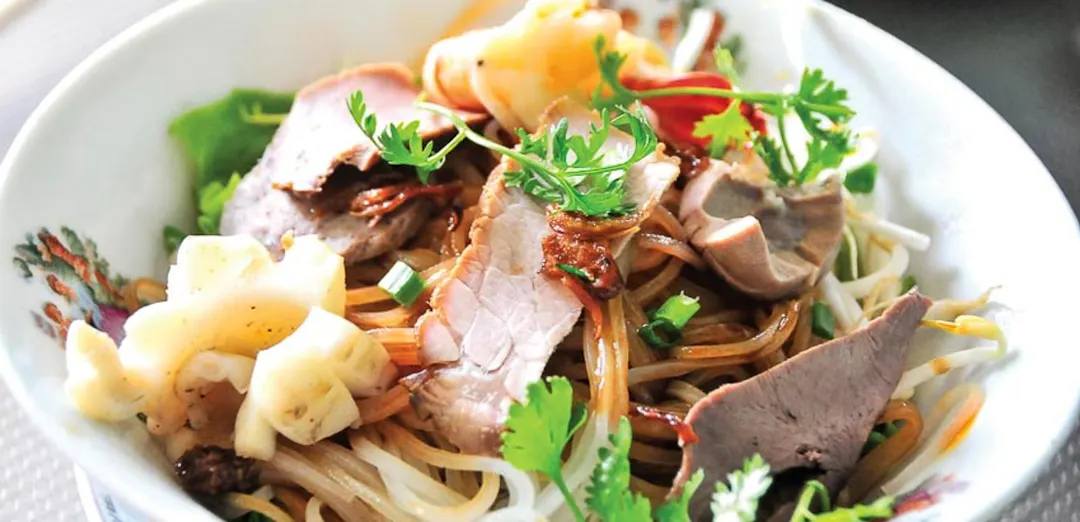
Traveling further west into the lush agricultural heartland of Dong Thap province brings you face-to-face with the second titan of delta noodle culture: hủ tiếu Sa Đéc. In the ongoing debate comparing Hu Tieu My Tho vs Hu Tieu Sa Dec, the primary point of divergence rests entirely within the physical composition of the noodle strand itself. Sa Dec has been celebrated for over a century as the starch-milling capital of Southern Vietnam, possessing clean, mineral-rich river water that produces superior rice flours. Rather than crafting a thin, sun-dried, springy strand, the master millers of Sa Dec blend high-quality rice flour with a generous proportion of local tapioca starch. This custom slurry is processed into noticeably wider, opaque, milky-white noodle ribbons that are kept fresh and moist rather than fully sun-dried. When blanched for just a few seconds in boiling water, the Sa Dec noodle yields a soft, velvety, and tender mouthfeel with a delicate, gummy chew that coats the palate, offering a stark, luxurious contrast to the snappy elasticity of its My Tho counterpart and demonstrating the remarkable diversity within regional Hu Tieu styles.
The Balancing Act of Pork Offal and Local Herbs
The flavor profile of hủ tiếu Sa Đéc is explicitly engineered to harmonize with its unique, velvety noodle texture. The broth, while still rooted in a pork bone foundation, is traditionally crafted to be slightly richer and more full-bodied, featuring a pronounced sweetness derived from local sugarcane and roasted aromatics. What truly sets a traditional Sa Dec bowl apart is its generous, nose-to-tail protein array. A classic bowl is laden with delicate slices of poached pork liver, tender pork heart, crispy bits of fried pork lard (tép mỡ), and rich pork intestine alongside standard minced meat. To cut through this decadent, savory richness, local vendors serve the dish alongside a massive plate of fresh, aromatic field greens, including garlic chives, saw-tooth coriander, and leafy lettuce harvested from the surrounding agrarian gardens. The interaction between the opaque, sauce-absorbing noodles, the rich offal garnishes, and the bright, bitter herbs represents a sophisticated study in culinary balance, cementing Sa Dec's status among the most famous Hu Tieu styles you need to try.
The Cross-Border Masterpiece – Hu Tieu Nam Vang
Phnom Penh Roots and Chinese-Khmer Synthesis
To fully understand the historical evolution of hủ tiếu Nam Vang, one must trace the maritime and overland trade routes that connected Southern Vietnam to the Kingdom of Cambodia during the late nineteenth and early twentieth centuries. "Nam Vang" is the traditional Vietnamese name for Phnom Penh, the cosmopolitan riverine capital where Chinese Teochew traders, Khmer cooks, and Vietnamese migrants created a profound culinary synthesis. The dish originally evolved from the Teochew flat-noodle soup kway teow, which was adapted in Cambodia using local Khmer ingredients into kuy teav. As migrant families moved eastward into the urban centers of Vietnam, they brought this cross-border masterpiece with them, adapting it further to suit the southern Vietnamese palate. This rich, multi-ethnic heritage makes hủ tiếu Nam Vang one of the most fascinating entries in any comprehensive guide to Vietnamese Hu Tieu varieties, serving as a living culinary artifact of historical Southeast Asian migration.
The Richness of Pork Bone and Dried Shrimp Broth
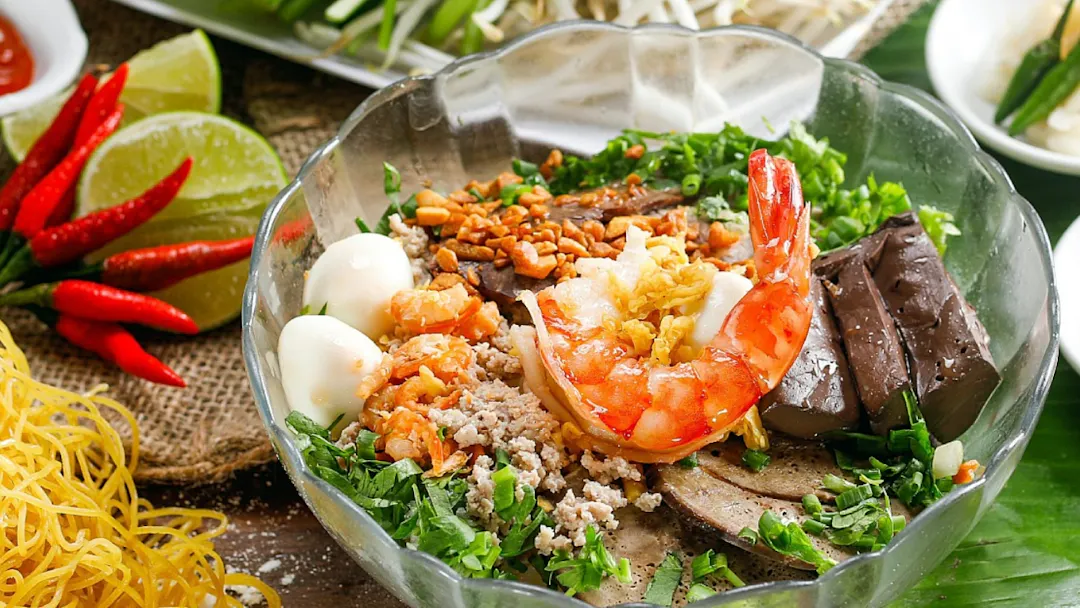
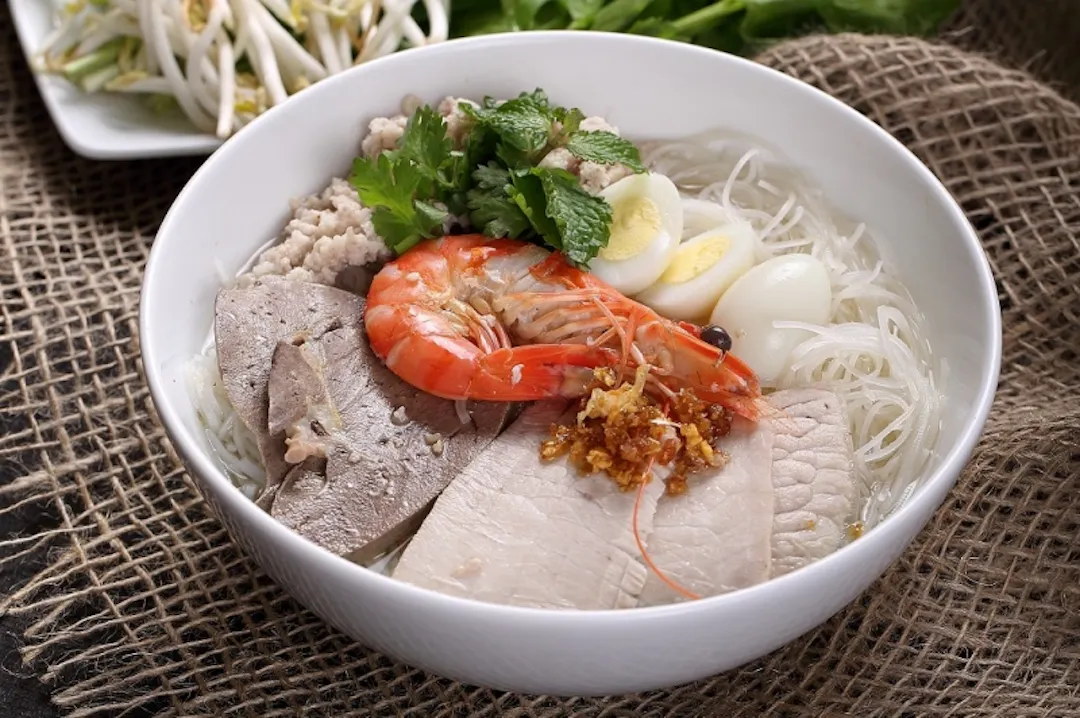
What distinguishes hủ tiếu Nam Vang from its purely delta-born cousins is its uncompromisingly decadent topping arrangement and deeply savory, complex broth formulation. The broth base relies on a intense reduction of pork leg bones enriched with toasted dried shrimp (tôm khô), which imparts a distinct, warm marine note that differs subtly from the squid-heavy broths of the coastal delta. However, the true glory of Nam Vang style lies in its lavish garnishes. A standard bowl features a mountain of fine minced pork scattered throughout the broth, whole poached tiger prawns, delicate quail eggs, thinly sliced pork liver, heart, and crisp fried garlic chives. The bowl is served alongside a signature dipping saucer of sweet hoisin sauce blended with fiery chili paste and fresh lime juice, allowing diners to dip their offal and seafood between bites of noodles. This luxurious, multi-textured, and intensely flavorful composition captured the hearts of urban diners across the country, transforming Nam Vang style into an omnipresent street food staple.
The Rural Coastal Heritage – Hu Tieu Go Cong
Coastal Flavors and Seafood Integration
Tucked away in the coastal province of Tien Giang lies a lesser-known, highly specialized regional treasure: hủ tiếu Gò Công. Situated near the ocean estuaries where river distributaries meet the sea, the historic town of Go Cong developed a distinct iteration of the classic noodle soup that reflects its unique maritime geography. While inland delta versions rely heavily on pork bones and dried land aromatics, Go Cong style fully integrates the fresh bounty of the sea into its foundational broth framework. The local stock is brewed using fresh sea crabs, toasted mantis shrimp, and locally harvested dried fish alongside traditional pork bones. This produces a broth that is noticeably darker, richer in natural glutamates, and infused with a distinct, briny sweetness that immediately signals its coastal heritage to discerning palates exploring the diverse types of Hu Tieu Vietnam offers.
Family Secret Recipes and Generational Craftsmanship
Unlike the highly commercialized and ubiquitous Nam Vang or My Tho styles that dominate major metropolitan dining halls, hủ tiếu Gò Công remains a fiercely guarded regional secret, preserved almost exclusively within tight-knit, multi-generational family kitchens across the coastal countryside. The preparation techniques are passed down through oral traditions, with individual families maintaining secret ratios for their broth spices and house-made chili oil pastes. A authentic Go Cong bowl is frequently garnished with fresh local mud crab meat, hand-rolled pork meatball patties infused with black pepper and wood ear mushrooms, and crispy fried wontons filled with minced shrimp. The absence of mass commercialization has allowed this rustic, coastal variety to maintain an extraordinary level of historical authenticity, making a dedicated journey to Go Cong an essential pilgrimage for food researchers seeking the true, unadulterated depth of Southern Vietnamese street food heritage.
The Urban Dry Revolution – Hu Tieu Kho Sai Gon
The Mechanics of Tossed Dry Noodles and House Sauces
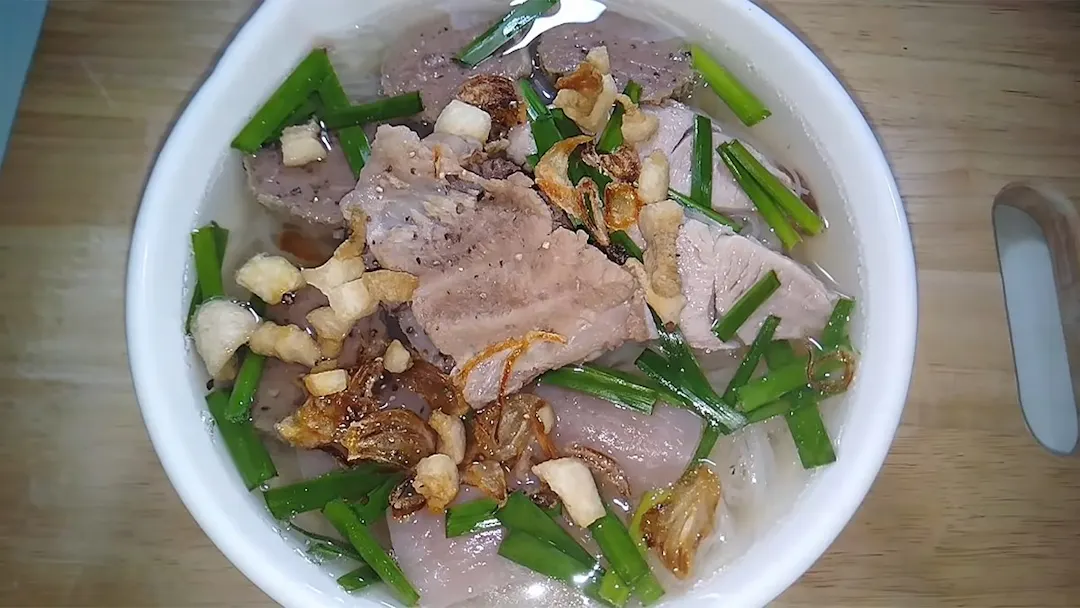
As rural migrant cooks flooded into the expanding metropolis of Ho Chi Minh City throughout the mid-to-late twentieth century, the fast-paced, kinetic energy of urban life triggered a revolutionary adaptation in noodle consumption: the rise of hủ tiếu khô Sài Gòn (Saigon dry-style hu tieu). In this modern, highly popular iteration, the traditional assembly method is split into an interactive, two-container meal. The blanched noodles—whether chewy My Tho style, soft Sa Dec style, or egg noodles (mì)—are served in a large, wide bowl completely free of broth. Instead, the strands are vigorously tossed in a thick, glossy, highly secret house sauce (nước sốt) crafted from dark soy sauce, oyster sauce, fried shallot oil, toasted sesame oil, rock sugar, and proprietary spices.
The tossed dry noodles are topped with crispy pork lard bits (tép mỡ), crushed roasted peanuts, golden fried garlic, and an array of poached proteins. The piping-hot, clear bone broth is served alongside in a separate, small secondary bowl, generously garnished with fresh scallions and coriander. The mechanics of eating dry-style hu tieu represent the pinnacle of urban street food ingenuity. The diner takes a bite of the intensely savory, sweet, and saucy dry noodles, experiencing concentrated flavor and toothsome texture, immediately followed by a soothing, warm spoon of clear broth to cleanse the palate. This rhythmic alternation between contrasting temperatures, textures, and flavor intensities creates an addictive, highly engaging dining ritual that has made the dry urban style an absolute staple for midnight diners, office workers, and street food enthusiasts across Saigon.
Conclusion
Ultimately, embarking on a comparative exploration of these five varieties of Hu Tieu reveals far more than simple culinary diversity; it uncovers a profound story of regional identity, agricultural ingenuity, and cultural adaptation across Southern Vietnam. From the sun-dried, snappy noodles and marine-infused clarity of hủ tiếu Mỹ Tho to the velvety tapioca luxury of hủ tiếu Sa Đéc, the cross-border historical richness of hủ tiếu Nam Vang, the briny coastal heritage of hủ tiếu Gò Công, and the addictive, saucy interactivity of Saigon's hủ tiếu khô, each regional expression offers a distinct window into the soul of its community. The true magic of Southern Vietnamese foodways lies in this refusal to conform to a single standard, celebrating instead the subtle shifts in climate, water, starch, and spice that make every bowl a unique masterpiece. As you plan your next culinary expedition across the south, make it your mission to seek out each distinct style, sit on a low plastic stool, lift your chopsticks, and savor the rich, living heritage embedded within every single bite.
Read more: Hủ Tiếu Gõ
Frequently Asked Questions
What is the main difference between Hu Tieu My Tho and Hu Tieu Sa Dec?
The primary difference lies in the noodle starch and processing technique. Hu Tieu Mỹ Tho uses high-starch rice dried under the delta sun to produce thin, translucent noodles (bánh dai) with a distinct, snappy chew. Hu Tieu Sa Đéc blends rice flour with local tapioca starch using pure river water, creating wider, opaque, milky-white noodles (bánh mềm) that offer a soft, velvety texture.
What makes Hu Tieu Nam Vang unique compared to other delta styles?
Hu Tieu Nam Vang represents a multi-ethnic fusion stemming from Phnom Penh, Cambodia. Unlike regional delta styles that focus heavily on pork loin and dried squid, Nam Vang style features a decadent array of toppings including minced pork scattered throughout the broth, whole poached prawns, quail eggs, pork liver, and fresh garlic chives, served with a signature sweet hoisin dipping sauce.
What ingredients give Hu Tieu broth its characteristic sweet-savory flavor?
Unlike northern beef pho, which relies on warm spices like star anise and cinnamon, Hu Tieu broth achieves its natural sweet-savory depth by simmering marrow-rich pork leg bones for hours alongside yellow rock sugar, daikon radish, and dried marine life—specifically toasted dried squid (mực khô) and dried shrimp (tôm khô).
What is Hu Tieu Go Cong and how does it differ from other styles?
Hu Tieu Gò Công is a rustic, coastal regional variety from Tien Giang province. Because of its proximity to ocean estuaries, the broth incorporates fresh sea crabs, mantis shrimp, and dried marine fish alongside pork bones, yielding a darker, umami-rich stock infused with a distinct ocean sweetness.
Can I order any variety of Hu Tieu in "dry style" (Hu Tieu Kho)?
Yes, most street stalls and restaurants allow you to order your preferred regional style as hủ tiếu khô (dry style). In this preparation, the blanched noodles are tossed in a thick, savory-sweet house soy and oyster sauce in one bowl, while the boiling broth and fresh scallions are served in a small secondary bowl on the side.
Advertising box